



How can a city plan for the future when we don't know when Robocars will come
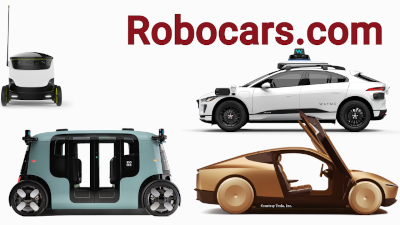
Robocars have been on the mind of city and transportation planners for some time. They have been told (correctly) that robocars will cause major changes to how people move around cities, and require a great deal of rethinking when it comes to planning and transit. The old 20th century ideas are wrong — but when do they change and what will the right choices of the future be?
The answer, of course, is that nobody is certain. And now that some robocar projects have been scaled back or slipped their dates, more are wondering just how they decide what to do. What if the technology doesn’t come as quickly as expected, or doesn’t come for a long time in the form expected. As this article describes, transit planners have a quandary. Some are enthusiasts, some are skeptics. Some are focused on their favorite solutions rather than on the goals that travelers, residents and governments have. They want to plan cities and infrastructure, but such efforts involve decades from planning to delivery. How do you plan when a plan from 2020 is almost certainly deeply wrong by 2030?
The answer of how to plan comes from the one industry that has had to live with constant change in the world under it’s feet — the computer industry. For over 50 years, computer chips have doubled in value every 1-2 years. No other industry has to deal with anything remotely like that. Imagine planning cities and transit if vehicles or construction or fuel cost 1/1,000th the price every 15 years, and kept doing that, decade after decade.
That industry’s answer has been to keep infrastructure as simple as possible, and expect to replace it frequently, putting as much value as possible into software rather than hardware. Software changes can be deployed for free, though they are of course not easy or free to create. The internet uses the same base design it had in the 1980s, known as the “stupid network.” All the smarts of the internet lie not in the network but in the endpoints — phones, laptops, web servers. They constantly change and improve and get replaced while the base network is as stupid as can be and stays the same. When it comes to infrastructure, you want to avoid long term changes because you know they will be wrong. Avoid them as long as you can.
There are analogs of this in the physical world of cities and transportation. Bare concrete is simple. It can carry cars, trucks, pedestrians, cyclists, motorcycles, buses, vans and vehicles yet to be invented. You can change the directions of roads, allocation of roads and rules of the road all with “software.” Even road signs and lights are “too smart” and should be replaced with software devices that let you change your mind. Here are some policies that can future-proof the urban design of the future:
BRT vs. LRT and other rail
Many cities think they love light capacity rail (LRT) and related technologies. But rails, while slightly more efficient and able to let the vehicle steer itself, constrain you too much. Unlike pavement, rails can carry trains, trains, trains or trains. Modern tech can let you run tire-based vehicles as though they are on virtual rails. It’s quieter and a lot cheaper, too.
This has attracted many cities to BRT (Bus Rapid Transit.) Instead of a light rail or subway, they allocate a dedicated bus lane, sometimes with occasional dedicated bridges and tunnels. It runs more like a rapid transit line with stations — no paying on the bus to slow everybody down. Cities like BRT because it’s vastly cheaper, but its real virtue is that the infrastructure is simple. You can change your mind in the future, allocating the path to robocar services, regular shared use, or something new. You can even lay down rails if that turns out to be the answer.
So to be clear, BRT is not the answer in the future. The buses are too large, the dedicated lanes with a bus every 2 minutes (as opposed to a van every 2 seconds) are much too wasteful of capacity. The reason to do BRT is that of the things which can be done today, it can most easily be repurposed into solutions of the future.
The same philosophy applies underground. Boston’s “T” Silver Line is BRT which gets a tunnel but is able to emerge to the surface and use regular roads on the way to the airport, which would have been difficult on rails.
Offline Stations
To future-proof even more, BRT “stations” must be offline. That means a bus can stop in one without blocking the path, allowing other vehicles to pass. Offline stations are hard with rail so old-school thinking doesn’t include them.
The bad news is that offline stations are hard, particularly for those trying to adapt a BRT lane into an existing road. That’s even hard with online stations as the platforms take away an extra lane during their length, and offline platforms would take at least two extra lanes, and ideally even more. If adapting existing tunnels with narrow stations it’s also challenging. If you have money, offline stations can be built above or below ground. Of course, above and below ground platforms require passengers to change level, which is not as convenient or accessible. Having the main path go above or below makes the pass-through ride less comfortable. For low volume lines, vehicles can pass by moving into the oncoming lane, which can be safe to do in computerized system.
Think Small
Contrary to intuition, smaller vehicles can be more efficient than large ones, because they provide better, more frequent and direct service, which is much more attractive to riders — increasing the load factor and thus overall system efficiency. That’s why the A380 may never fly again. In the past no system could afford all the drivers this would take, but eventually that won’t be the issue, so be ready. Even if you want to design for big vehicles today, make a plan that can adapt to using smaller vehicles and different types of vehicles in the future.
This also applies to tunnels. While many wonder if Elon Musk’s “Boring Company” dream of cheap tunneling will come to pass, one thing is certainly true — smaller tunnels are already easier and cheaper to dig than big ones.
Smaller vehicles also make it easier to make offline stations.
Expect the Smartphone
You don’t have to tell people to expect the smartphone, one would hope, but people still don’t really think about a world where everybody, even the homeless have them, and they all naturally expect to use them as part of their travels and life in the city. We’re now at the age where if you don’t expect a smartphone in every car, you’re doing it wrong. Every day, more and more drivers never do a long drive, even their daily commute, without asking and obeying programs like Waze, like we’re little robots. In cities that have live transit data, you’re nuts to use a bus or sometimes even the subway without consulting it, and people know it. We’re entering a world where the way people use the infrastructure is under the control of software, and on the cusp of being able to insist on it. Our early experiments with congestion charging, managed lanes, ramp meters and coordinated traffic signals are just the beginning.
Consider a world where cities can give advice and even orders to cars to avoid congestion. Where traffic volumes can be set to make streets peaceful where we want them and serving flow demand where we want that. The old idea that it’s a big network of streets that people just squeeze themselves into is already fading. Make a plan that’s ready for that, while also ready for the pace of change to be unknown. Cities know not to install dumb traffic signals, and you do want all of them to be software devices, but the reality is that most drivers should rarely encounter a red light if you do it right, because a higher level software infrastructure doesn’t wastefully advise them to drive in a way that encounters them.
The rule of the smartphone is simple: The smartphone always wins. If it can be done in a phone, it’s a losing battle to do it any other way. Many efforts at building a “smart city” have been, and will be obsoleted by technology in smartphones. The reason is straightforward — people replace smartphones every 1-2 years, and because they are sold by the billion, they have vastly superior economies of scale over any product. Your smartphone is only a year old, and was designed just a year before that. The software on it was updated yesterday. That’s unlike everything else from infrastructure or industry. Even if the smartphone doesn’t seem like the leading candidate for an application, it will be.
A great example can be seen in the measurement of traffic in cities. For many years, cities were eager to measure what was happening on their streets. They spend millions digging up streets and installing sensors and cameras and systems. At the same time, a few folks in Tel Aviv built a smartphone app called Waze. Without spending a dime on infrastructure they quickly had superior traffic and movement data on almost every city in the world.
The internet principle of putting the intelligence at the endpoints is at play here. Don’t make the smart city — rely on smart vehicles and smartphones in the hands of the people.
Originally published at Forbes.com in Memo To City Planners Contemplating Robocars: Keep It Stupid. Copyright © 2020 by Brad Templeton.


Comments
FKA
Thu, 2020-08-13 05:16
Permalink
New cities
If I had enough money I'd be buying up all the cheap land I could find. The opportunity to build entirely new neighborhoods assuming nearly 100% of vehicles are autonomous is tremendous.
Hopefully "city planners" will get out of the way of the innovators who actually build the cities of tomorrow. I'm sure that will happen in some places, and those places are the ones where you should buy land today.
brad
Thu, 2020-08-13 10:36
Permalink
More money
Actually, I think the bigger real estate opportunity will come from land that is useless today, but is hugely valuable with e-VTOL. e-VTOL are definitely coming for the rich outside of town, a bit longer maybe to show in the cities.
Peter S
Thu, 2020-08-13 12:40
Permalink
How much
It's fun to think about the land and regions that might be revolutionized by e-VTOL. I find the japanese countryside to be an interesting case.
I wonder how much more valuable currently useless land would become though. It would of course increase in value, but since the total supply of usable land would increase so much it seems to me that the reduction in value of currently valuable land would be much larger than the increase in value of new land, with the result that real estate becomes a much smaller part of the economy. That might then have some interesting second order effects on the world economy...
FKA
Fri, 2020-08-14 03:55
Permalink
bigger?
Sounds like a small niche to me, but I don't know much about it.
What would be an example of land that is useless today, but is hugely valuable (for residential purposes?) with e-VTOL?
How much does that land cost today? Got any links? It's not quite as interesting as the cheap acreage you can get today in vast areas of the USA, but maybe a small plot of mountainside land (or whatever it is) would make a good investment. How do you build there? Gotta wait for cheap helicopters to do that too?
As far as land that will be more valuable with self-driving vehicles, just about anything outside of the city, especially far enough outside the city where land is still cheap.
Increasing my commute from 10 minutes to an hour wouldn't be so horrible if I could work in the car without any of the stress of driving, and you can get great deals on houses if you're willing to go that far away from the places where most of the well-paying jobs are located.
The reverse works too. More businesses can get away with setting up shop outside the city if commuting to them is less of a drag. And local businesses will spring up to serve the residents.
It has been happening for decades and decades now, but I firmly believe that self-driving vehicles will greatly accelerate the process.
brad
Fri, 2020-08-14 10:16
Permalink
e-VTOL property
Hilltop and hillside property. Today it's not practical, as you have to build a nice road (rather than a dirt track) and you need electricity, internet, water and sewer. Even if you do put in the road it can be a 20 minute drive down the hill. The latter ones remain the same problem, but today you can put in electricity and comms anywhere, and be down the hill in 3 minutes.
FKA
Fri, 2020-08-14 16:52
Permalink
Why
Okay, but what's the draw? Why build on property that requires such an expensive mode of transportation (it'll always be expensive) when there's so much cheap land all over the country?
Sure, some top 1%ers are gonna love flying around in their robot flying lawnmowers, but robocars are going to be a huge benefit to them plus the other 99%. It's a much bigger market.
brad
Fri, 2020-08-14 22:22
Permalink
Always expensive
Well, you can believe it will always be expensive. I and hundreds of companies don't.
However, even if it is expensive, but if you can have a lovely hillside/hilltop estate and still be downtown in 15 minutes, and in a nice play to walk and shop in 5, that's going to be the best of both worlds for a lot of home buyers. The privacy, views, acres and nature of a private estate on a hill, with the convenience of living a short ride from town, work and school? There's a lot of people want that. And they will want it on land that today is cheap because it's not practical to do that on it.
FKA
Sat, 2020-08-15 04:02
Permalink
thanks
Thank you for letting me believe something different from you.
Even the most optimistic estimates I've found estimate the cost per mile will be many times that of ground transportation, and that's for specific high traffic routes, not for point to point from your house to your destination.
I have little doubt this will be revolutionary. Many people will use it occasionally. Some will use it much more frequently. I don't think a large percentage of the population will use it to commute to and from their otherwise not conveniently accessible "private estate on a hill." For those who can afford that, I'm sure it'll be great. It'll be great in large part because it's not something that everyone can afford (hence the "privacy, views, acres and nature").
eVTOL might also be used by the masses. But not for commuting to large, private, quiet hillside estates.
You have my permission to disagree with that. ;)
brad
Sun, 2020-08-16 11:55
Permalink
Why not
Around here, we have a lot of hills. There are a lot of very nice estates up in the hills, and as fancy properties, they built roads to them. These estates have nice houses at high prices, and great views and privacy. However, typically it can be 20 minutes to drive down to the valley floor and the highways for a commute or shopping trip or other such trips. An hour to San Francisco. But an eVTOL could get you to San Francisco in probably 15 minutes from these houses. You don't think people will want one? They have enough land to not have to worry about noise complaints from the neighbours as much. They will be able to land on the waterfront in San Francisco, the piers can take the noise and there is no need to fly over houses there. You do have to fly over houses to get there the direct way but you do that at high altitude in very quiet fixed wing electric flight.
You don't think they will want it? You don't think it will make these homes more valuable? Or other places that nobody built a road to? (I do think new hillside development will need some type of road probaby, but it will be just gravel or dirt and rarely used by the residents.)
FKA
Sun, 2020-08-16 14:32
Permalink
expense
As you said, they are nice houses at high prices already, so of course people will want them. People already do want them.
I don't think it's anywhere near as revolutionary as self-driving cars. An hour to San Francisco in a self-driving car will be a tiny fraction of the cost, and will be quite bearable compared to today. In some ways better because it'll be door to door with no transfers, and it'll be roomier. Probably safer too, although some eVTOL designs are safer than others.
The time difference might not even be as much as you think. Once we have dedicated lanes for autonomous vehicles they'll be able to get places quite quickly.
In any case, most of the areas that'll benefit from self-driving cars will also benefit from self-flying aircraft. So buying up land which is cheap because it's a long drive from the city will get you the benefit of both innovations. (I just think a lot more people will use land-based transportation a lot more frequently.)
brad
Mon, 2020-08-17 10:15
Permalink
Fraction of the cost
Well, Sebastian Thrun and others disagree about it being a fraction of the cost. Particularly on a trip like that, he says his latest vehicle, the Heaviside, uses less energy for the trip than a car (particularly on a trip like this where it travels much less distance by going in a straight line.) The vehicle won't be quite as cheap but pretty affordable. No roads needed so no infrastructure costs other than the vertiport you land at in the city. Where you step into a robotaxi to make it door to door.
FKA
Mon, 2020-08-17 18:54
Permalink
3.225 trillion
It's pretty easy to find people who will disagree with anything. I'll believe it when I see it, which I won't.
3.225 trillion miles were driven in the USA in 2018. Sure, maybe you can make a small number of these things at a cost approaching cars, if you ignore all r&d costs. But if your price approached that of cars demand would be not just for a little bit, but for trillions and trillions of miles.
Lots of technologists don't know much about economics.
Ross
Fri, 2020-08-14 13:46
Permalink
Buying cheap land
FKA, you should read "Realityland: True Life Adventures at Walt Disney World." Buying up cheap land and building a city of his own vision was exactly what Walt Disney planned to do. Unfortunately he passed away before the city part could be realized, but the book is still very instructive about large-scale private development.
As for city planners "getting out of the way" you should spend some time talking to your own city planners. I did, and I have a new respect for all the myriad constraints they need to operate within.
FKA
Fri, 2020-08-14 16:46
Permalink
Disney and Orwell
Thanks for the reference. I very much had Disney in the back of my mind while talking about that. Florida is still a good place to do that sort of thing. Nowhere near the steal it was when Disney was secretly buying up land, but you can get some good deals (some of them are not too far from Disney World, in fact).
I've been to seminars held by "city planners," and some of what they do is legit in that someone has to think of these things. The whole process of getting even a minor variance is way too expensive and political, though. Not to even mention how expensive and political it is to try to deviate from the "master plan" (a term which even sounds Orwellian). I wish it were judges that decided disputes over these sorts of things, not "city planners."
Add new comment