



Figuring out parking for robocars
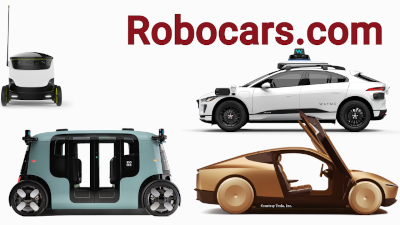
Robocars are very close to being able to drive the roads at a safety level to match humans. But what about dropping you off, picking you up, and parking or waiting?
For most teams, driving on the roads will be done with detailed maps of the road. They will know where to go on any road, and also how to tell if the road differs from the map and what to do in that situation. (All cars will have at least rudimentary ability to drive without maps for this situation.)
Those maps will include the locations of parking spaces and standing spaces on the public roads. Standing spaces can include the entrances to driveways and spaces in front of fire hydrants, suitable for pick-up an drop-off. Cities have long allocated "taxi stands" for waiting, as well as pick-up/drop-off areas, and recently I have observed such areas being allocated for use with Uber/Lyft style services.
Drop-off points and parking spots are very commonly on private land, though. How will cars know where to go if you are heading to a private destination?
For important private venues -- schools, public buildings, and large buildings, the mapping companies will map them just as they do roads. Most of them would allow a human-driven mapping car to pay a visit. In addition, privately driven cars with sensors will also frequently travel to them and can gather mapping data.
Generally, such maps need a basic level of human review, and as such, buildings below a certain threshold of traffic will not get mapped as quickly as high traffic buildings. This can be solved by allowing the owners, and even the public, to map these spaces. Somebody motivated will generally be able to start with an aerial image of the private area to mark out the geometry of the space -- where can cars drive, what is sidewalk, where any pick-up/drop-off points are and, as described below, waiting/parking areas. If there are not high-quality aerial image of a location (ie. it's non-urban) owners could, at a pretty low price, request a drone overflight to help.
The cars don't use the aerial imagery to navigate -- this is just to get the rough shape. A visit by a robocar (or human-driven car) with the right sensors is needed. That gets easier and easier as more robocars are available. Such cars can have a remote human supervisor when they enter the unknown space to map it. The supervisor almost never "drives" it like a human with a wheel, rather they give strategic commands, like pointing to a spot on an image and saying to drive to that spot. The car worries about not hit anything along the way, or noticing things the remote operator might not see.
With remote operators, such mapping can be quite cheap, because we need no human for the journey to the parking lot, just while the car is navigating strange territory.
Even companies that claim they will drive without maps, like Tesla, will need maps of private territory. Public streets are required by law to follow certain patterns and rules. Things may differ from town to town but generally there is a system to figuring out what's road and where the parking is and what places might be suitable for pulling over. Private land follows only social conventions, not laws. It's built by whoever owns it, however they like. Street signs on private land often have no force of law. You may see complex rules saying which parking spaces are reserved at different times or anything else the lot wants to explain in human language. You want a human to make sense of it, and encode it in a way the machines can reliably use.
My expectation is that robocar companies (not just taxi companies, because people want their private cars to be able to come and pick them up on private land) will offer private lot owners the ability to choose from various systems to manage how cars come to their land. These systems will go beyond what even humans understand today. They will be allowed to designate waiting areas, something like the taxi stands of old, and instructions on how to get in and out and in what order.
It might be common for a busy building (at the extreme, imagine a stadium after a game lets out) to want a fairly involved management system. In such a system, cars would be told that to go to the stadium, they must first get permission and instructions from a computer managing the stadium lot. (They won't communicate with that computer, their HQ computer will do that, to avoid the risk of direct communication.)
The stadium computer will manage traffic coming in, and only let in as many cars as it can handle. It may arrange priority based on all sorts of rules, such as priority for people on the curb and ready to go, for VIPs and in particular for those carpooling or vanpooling. Each arriving car will probably be told to move to a line and then to a pickup spot. The car can then tell its rider what pickup spot it will be coming to.
For cases as extreme as emptying a stadium, at first they might allow only buses to come, and those buses might move to other, more distant lots where private cars can go to receive passengers who came on the shuttle.
Office buildings will need more simple versions of this if they don't have a parking lot. If the office building has a parking lot (as most do from the legacy days of private driving) the cars can go pick up people in the lot by going to stalls where their master awaits.
All of this needs maps and protocols, even for a Tesla. In addition, there needs to be some management of the public street at the entrances to the stadium or office building. That gets naturally managed if the stadium is only allowing in a fixed number of vehicles, and there is enforcement of rules against stopping or driving slowly by the entrance. This will make cars doing pick-ups go to less antisocial places to wait, so that they can get a signal to come get their master when it's a reserved straight shot to where the people are waiting.
Even things as simple as grocery store lots will have management if they wish it, to control how cars go to parking spots, how delivery vehicles arrive, and how cars move to pick up customers at the door. As the number of people using robocars rises, the pick-up areas will increase in size to handle it, but that's easy because the need for parking drops.
Good pick-up areas with limited space can be handled in one of two ways. If there is space, the best is perpendicular. You have a long series of perpendicular spots, and cars arriving just go to a spot to load or unload. With much less space it is also possible to just have a single lane. Cars would come into the lane in a group and all stop right in the lane to do load/unload together, then all would leave at once, and be replaced by the next batch of accepted cars. Even a small single lane should be able to do a nice, high volume of pick-up and drop-off compared to the way it works today.
It surprises me more places don't use the perpendicular approach today. That's how Singapore Changi airport has done it for years, and it has a deserved reputation as one of the best-managed airports in the world. When I see the long, snaking taxi lines at some airports that load just a few customers at a time, it baffles me.
Valet style
One thing that will
be very popular is for lots to designate areas for robocars parking in "valet" mode, which is to say, packing themselves in tight for best use of the space. This may be as simple as laying out a space in the map of the lot and telling cars to arrange themselves, or it may involve a server which manages the lot dynamically, changing the size of the valet area based on demand, and even having the cars report their size and expected duration in the lot so the system can decide where to put each car if it wants.
While a central computer managing the lot can do a lot -- parking lots won't have to run their own, there will be companies offering this as a low-cost service – the cars can do quite a bit on their own, including managing exit from the valet area. For example, you will know that in the valet area, you can park in a way that blocks in other cars. Later, when a car wants to move, it doesn't have to communicate with anybody. It just starts to slowly move, just an inch, closing the gap with the car that blocked it. That car will then move, and that will cause the next car to move and so on, until the whole column exits, letting that first car out. The column then re-parks itself in the empty space. This can also be done on the sides of roads, with cars turning on a turn signal to say they want to leave. There, as long as one empty space is kept per row, the cars can "move the space" to put it next to the exiting car, which pulls out, almost like the other cars are not there.
Originally published at Forbes.com in How Self-Driving Cars Can Figure Out Parking. Copyright © 2019 by Brad Templeton.


Comments
FKA
Thu, 2019-06-27 06:33
Permalink
Parking and driving
Parking and driving are two fairly different problems. Parking is fairly simple, I think. Either a human (in the car or in a remote location) okays the parking location or the parking locations/times/rules get okayed by the property owner ahead of time. For most places right now it's a simple matter of selecting which parking stalls are allowed to be used (and possibly what times use is allowed). Further into the future that'll change, but by then there will be lots of parking space dedicated solely to serving robocars, and that's a fairly easy problem to solve.
Driving in a private parking lot is a much more difficult problem; but I'd argue that it is a problem that has to be solved in order to have successfully created a robocar for public roads. Sure, you can fake it by relying on human-curated HD maps or on accurate lane markings and other traffic control devices, but the real world is too messy for that. This is especially true in private parking lots, but it's also true on a great number of public roadways as well.
A robocar needs to be able to figure out how to drive when there are no lane markings, no maps, and essentially no rules (difficult private lots don't have strange rules, they have what is essentially no rules). It should be doable, but I haven't seen any evidence that anyone has even come close to building a car that can do it. Hopefully I'm just not up to date with the state of the art.
brad
Fri, 2019-06-28 01:24
Permalink
No maps?
My feeling is, why does it have to park with no maps? The owner of the lot either wants robocars (including those of the owner, employees or customers) to park there or doesn't. If, for a fairly modest fee, they can get a map of the lot made, why not? There are two functions -- parking/waiting, and pick-up/drop-off. For the latter, if the lot does not have marked spots for pick-up/drop-off, you use te closest public spot (which will be mapped by the car operator.)
If a person is with the car when it parks, they can solve any problems of unmapped lots.
FKA
Fri, 2019-06-28 17:37
Permalink
I mostly agree
My comment about needing to be able to do it with no maps was about driving, not parking. I don't think using the closest public spot to drop passengers off is reasonable. And I don't think you can call your car a robocar if it can't handle driving through the vast majority of parking lots. My comment was definitional. If a car can't figure out how to drive when there are no lane markings, no maps, and essentially no rules, I wouldn't call it a "robocar." "No new infrastructure" is one of the key requirements to be a robocar. https://www.templetons.com/brad/robocars/vision.html Up-to-date, human-curated, detailed maps of every driveable location on earth is infrastructure.
For parking, I agree, although I think in most instances it won't (and shouldn't) even require a fee. Just for the owner to look at a map and click on which parking spots are allowed. In some cases, if parking is tight, the robocar company might even be the party paying the fee. You say "the owner of the lot either wants robocars...to park there or doesn't." But it's actually not that black and white. The owner may very well want some robocars to park there and others not to. There's going to be competition. A robotaxi company that tries to charge land owners fees in order to park on their land will quickly lose out to other robotaxi companies. That actually goes for drop-off as well, although only the most popular destinations (e.g. stadiums, airports, Disney World) will get away with restricting which robotaxi companies can use their best drop-off locations.
In essence, a robotaxi with passengers in it should be able to go virtually anywhere a taxi can go. That includes being able to drop off those passengers and then proceed safely and relatively courteously to its next destination, whether that be a parking spot or to pick up a new passenger. Not all parking spots need to be fair game, and not even all areas of a parking lot need to be fair game, though practically speaking there likely does need to be parking available somewhere relatively close for all but the most crowded locations. A robotaxi without passengers in it should not drive or park on private land except with permission of the land owner, as necessary to leave an area after dropping someone off, or to pick someone up who has explicitly called it to that location (and the latter only if the land owner does not explicitly prohibit such pick ups).
Also, of course, many cars will have options for someone to take over the wheel in locations that aren't adequately mapped. I don't think you can call such a car a robocar, but it will be extremely useful to have a car/service that can drive autonomously on most public streets and in a few very popular private parking lots, and can drive manually everywhere else.
Later on (or maybe earlier on), I definitely foresee cars with no steering wheels, but which are still operated by humans. A steering wheel is a fairly poor device to provide the sort of human input that not-quite-robocars need. They're mostly an appendage of the days before drive-by-wire. It'll be interesting to see how the law treats such a car.
brad
Sun, 2019-07-07 03:56
Permalink
The map is not complex
As you say, it can often be constructed from an ariel photograph. The main concept of the "map" is just that a human being has confirmed the rules of the lot that a robot may have trouble figuring out, because unlike roads, there is not necessarily a pattern to parking lot rules that is universal. And for new concepts, like areas where you should ignore the lines and valet park, there is no system and virtual infrastructure is the cheapest way to do it.
FKA
Sun, 2019-07-07 11:56
Permalink
The maps in my brain are extremely complex
I'm not sure if your comment was about parking or driving through lots or both, but I think that makes a big difference.
For parking, a robotaxi company is probably going to need to get permission from the land owner anyway, so it's not a big deal to make a map while doing that. Additionally, if you can only park in 1/10th of the parking lots in a city, that's more than enough.
But for picking up / dropping off, I just don't see how maps are very helpful. It's true that "there is not necessarily a pattern to parking lot rules that is universal." But the "rules" (in quotes because they're not really rules, but customs), especially in places where they deviate from local customs, are also not particularly human-mappable.
I think this is true with public roads too, by the way, albeit less so, especially in countries with better-enforced driving laws.
Driving to a large extent involves playing follow-the-leader, not following particular rules. This is true sometimes on the public roadways (a good example would be the driving I did this past July 4 trying to find parking for the fireworks show), and it is true more frequently in parking lots. You can't map that kind of stuff. It's ad-hoc, and it changes frequently.
For large venues (stadiums, amusement parks) or major events (4th of July, New Year's Eve), once robocars are common enough, there will be a need for infrastructure. But here I'd disagree with you that physical infrastructure doesn't make sense. In these sorts of situations, where there's a lot of robotraffic, it makes sense to give the robotraffic its own dedicated lanes. And it's not expensive. For a temporary event, it could be as simple as putting out a bunch of traffic cones and a "robocars only" sign. Yeah, they can notify the companies to let them add the entrance/exit to the dedicated lanes to their maps. But they don't need highly detailed maps for that.
Large permanent venues will benefit from having more expensive infrastructure for robocars. But this will be instead of the (even more) expensive infrastructure they have for human driven cars.
Eventually, when/if robocars start taking over the world, even smaller venues (supermarkets, fast food drive-thrus) will probably start having dedicated robotraffic lanes.
brad
Tue, 2019-07-09 16:31
Permalink
You can map it
Because all it has to be is to draw a box around an area and say, "robots park here under standard robot valet rules #4." Then put up signs saying robots only. And yes, robot valet rules #4 has rules about what to do when humans park there anyway.
FKA
Tue, 2019-07-09 16:56
Permalink
Yeah, for showing them where
Yeah, for showing them where they can park, it's easy to map it.
Doggydogworld
Thu, 2019-06-27 07:22
Permalink
Just kludge it
Give lot owners the option of designating robocar lanes and waiting spots. These can be painted and/or specified by lat/long points. The first mover creates an open standard that other robocars can use. The first mover would do the heavy lifting of tagging the lanes at the lot owner's request.
For lots without designated robolanes just use a feature like Tesla's enhanced summon where the car navigates very slowly toward the rider's phone. Since the rider chooses the pickup spot there's no need for the car to "understand" every parking lot on the planet.
FKA
Thu, 2019-06-27 16:47
Permalink
Tesla's enhanced summon
From what I've seen of Tesla's enhanced summon, it is truly awful. No understanding whatsoever of how to drive in a parking lot. Yeah, it can avoid hitting things (usually, except apparently for curbs), but that's about it.
I'm sure some other companies are doing better, and I'm sure Tesla will also get better over time. But it's going to take real AI, not detailed maps and/or hand-programmed rules.
(I was somewhat surprised by how awful Tesla enhanced summon was. The car doesn't seem to even understand how to drive on roads that don't have lines.)
brad
Sun, 2019-07-07 03:57
Permalink
Figuring it out
You can figure out many parking lots but because there are no formal rules, a small layer of virtual infrastructure (maps) is much cheaper than new signs or painting lines. Why do it the hard way with physical infrastructure?
FKA
Fri, 2019-07-12 05:31
Permalink
$50 lidar
I sure hope these stories about $50 lidar are true. That'll make driving through parking lots a lot easier.
brad
Mon, 2019-07-15 06:49
Permalink
Cheap sensing
Actually, if you just want a sensor with short range 3D sensing, those are already much less than $50, using phased based time of flight, or even 3D ultrasound. The range is typically about 10m which is workable for parking lot speeds. People use them on lower speed robots, they are not found on cars because the cars already have higher ability sensors.
FKA
Tue, 2019-07-16 04:55
Permalink
Not all I want
My hopes that $50 lidar sensors become a reality are not limited to the impact that'll have on driving in parking lots.
Doggydogworld
Tue, 2019-07-16 13:49
Permalink
Cheap sensing
I imagine Tesla' Enhanced Summons relies on their ultrasound sensors to give them reliable object location info. This satisfies the "Thou shall not hit stuff" commandment even when their image recognition NNs fail.
Of course that just gets you to the starting line. From there you can begin to solve the myriad real problems of self-driving, even if it's just in a parking lot.
FKA
Wed, 2019-07-17 03:37
Permalink
Curbs
They seem to have a problem with curbs. Lidar could probably help, though more cameras would likely help as well. I'm not sure how precise the ultrasound sensors are.
At least for now, summons isn't self-driving. It's remote-control driving, albeit with very poor controls.
Add new comment