



EV fast charging connector battles and standards wars might be OK
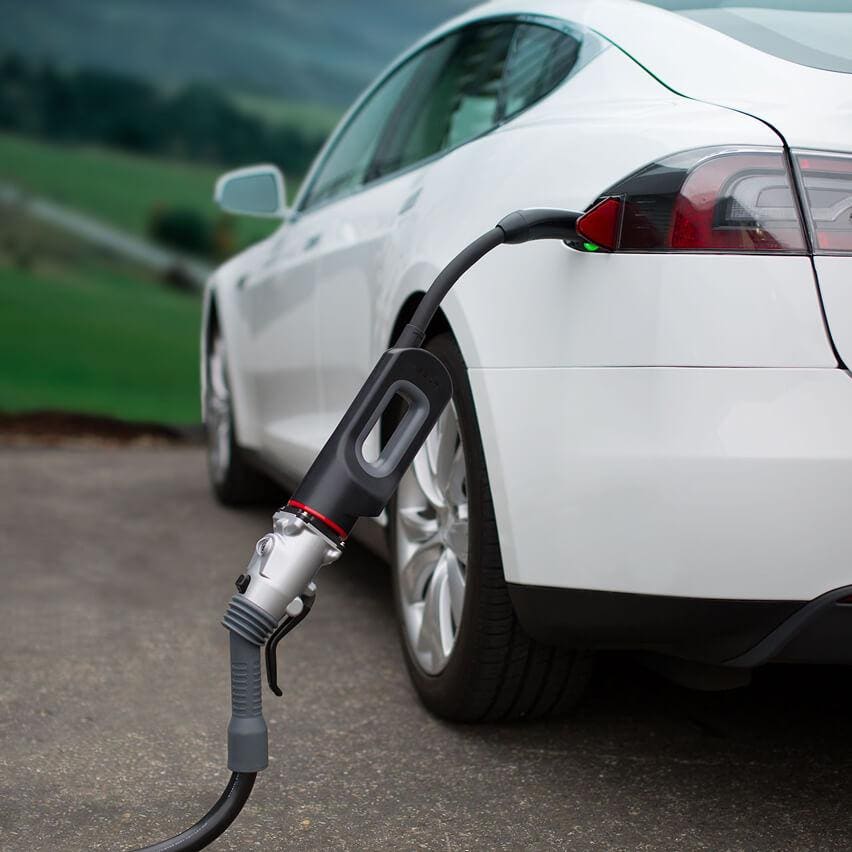
In every industry that requires connection or interoperation, there are standards battles, so of course electric car charging has one. In the USA, there are two main connectors for slower Level 2 charging (Tesla and J1772) and three connectors for fast Level 3 charging (The same Tesla, Japanese CHAdeMo and an expansion of J1772 called CCS from non-Japanese automakers.) The reasons for all these connectors involve a complex history which I will outline below, but first I want to write about how we can get to what all drivers, and most charging station operators want, which is for every car to be able to charge everywhere.
One answer to that would be a common standard, but that didn’t happen and many of the reasons it didn’t happen are valid in a constantly changing and innovating field. The other answer is adapters.
No adapters between CCS and Chademo (as it is more commonly written these days) exist. An adapter to let a CCS car from Chademo is the easier of the two to build, but instead, almost all new charging stations are just installing both CCS and Chademo plugs on them to serve both cars.
An adapter to charge a Tesla from Chademo is sold for $450. This is the easier adapter to make, though in Europe older Tesla cars can get a CCS adapter for €500. Chademo is easier because it uses the same data protocol and manges locking in its own plug.
There are no adapters to let other cars charge at superchargers. While they could be technically possible, Tesla built its supercharger networks out big and quickly at great cost so that Teslas would be the only cars able to take practical road trips — and it works, and contributes to Tesla’s sales. They even provided supercharging for free to Tesla cars for many years. While they could decide to offer their chargers at a profitable price to other cars, for now they like being the only car with a dense, very high speed charging network. Elon Musk has said they don’t need to be a walled garden, but the other manufacturers would need to pony up some of the cost of having built the network.
Tesla has taken an odd path, though, with their Chademo to Tesla adapter. Their supercharger network is so good that one should rarely need it. Almost every Chademo station has a supercharger not too far away. However, there are a selection of places (California highway 99 is a big example) where that’s not true. If Tesla owners can charge at Chademo stations there (and a few other places) it’s good for the operators of those charging stations, but very good for Tesla owners, and Tesla itself.
To my mind, the obvious strategy for Tesla should have been to offer the adapters, at cost or even free, to the Chademo charging operators, not to the car owners. There are perhaps only a few hundred such Chademo stations. The adapter could be provided in a protective box with a retracting locking cable on it.
- For the station owner, it’s a big win because Teslas are by far the most popular electric cars that might come by their stations.
- For Tesla owners, it’s a big win because now they can do road trips in places they can’t otherwise go, even if the charging is slower and a bit more expensive.
- For Tesla, it’s a big win because their cars become more useful, and Tesla gets that at a tiny, tiny fraction of the cost of installing their own supercharger in this more marginal locations. Tesla should actually list these stations in their charging maps and charge planning navigator.
- For owners of Nissan Leafs and some other cars, it’s a loss, because the Chademo stations would become much more heavily used due to all the Teslas.
In fact, a few Chademo stations have actually purchased these adapters to loan out to Tesla drivers. As yet, there is no way to get those to display easily on your favorite charging map.
An alternate approach would be for Tesla to rent these adapters at a break-even price to Tesla owners going on road trips. This doesn’t require agreement with the charging stations but does the job, though it needs a lot more adapters as there are vastly more cars than stations where you would want to use them. In my own experience, I would ever have used one 3 times in a year of driving with 3 road trips. There is a company which rents them for about $40/week.
Even so, none of these things have happened, and they may not, because more than the simple desire of drivers and stations to make charging happen is pushing decisions in this area. There are also egos and pride, which comes from the history.
Update: Just hours after releasing this story, charging network operator EVgo announced it would be placing Tesla adapters at some of its Chademo stations. The first 5 are in San Francisco (not very useful because there are superchargers there) but in time they will presumably spread out to more isolated stations.
Designing for a world of competing standards
People who try to design interfaces like EV plugs all presume that their standard, or at least some standard, will win. Sometimes that happens but sometimes it doesn’t. It would be better for the world if such designs presumed they might not win, and instead made it easier for multiple standards, and adapters, to exist. A key way to do that is to make sure data communications can always be done, and that power exists to power processors which do such communications or which do interfaces. Chademo provided that power, CCS did not.
Of course, you want the digital protocol to communicate what voltages and currents are to be used, and to understand if they can be made compatible. While cars can’t change the DC voltage they take, that remains up to charging stations to handle. They can be upgraded as new cars come along since they are already converting the power to the output voltage.
Another key factor is how locking is done. You can lock in the car (As Tesla and CCS do) or in the connector. One way to be future-proof is to put in the holes for locking pins on both (which is cheap) and only put the pin in the place you like. Adapters can then do it both ways.
The history of EV charging
The conflict has come over high speed “Level 3” charging, known as “DC Fast” or “Supercharging” in Tesla’s case. In addition to the Tesla system, as I described above, there is the Japanese system CHAdeMo and the Euro/US system known as CCS. People lament that there are 3 systems, since it’s a common mantra that “standards” are of primary importance. Standards are valuable — and both Chademo and CCS are multi-company standards which compete — but they also often mean an impediment to innovation, which is bad when an industry is nascent and growing. Sometimes standards have allowed a stagnant industry to take off (VHS, the compact cassette, CDs and DVDs are an example) but sometimes they have stood in the way. In the computer industry we tell a joke that “the great thing about standards is that there are so many to choose from.” Standards are more often useful when it comes to hardware, where things have to plug into things, and less useful in software, which can be adapted and changed in the field in real time.
The 3 plugs in cars derive from history. Everybody knew that to make electric cars practical, they needed to charge much more quickly. At least, that’s what people thought when batteries were small, and cars could go only 80 miles in a day. Over time, we’ve learned that the big reason for fast charging is to allow very long trips, like highway road trips — slow charging every night at home actually works just fine for the new generation of cars with bigger batteries. It’s also useful for fleets and trucks.
In Japan, they developed Chademo. It could charge at about 50kw, compared to the 3-6kw typical for slow Level 2. That’s much faster, and fine for a small battery car, but a bit slow for the new cars. Chademo uses a very large plug, and it’s a completely different plug from the Level 2 plug (J1772.) Cars that use it need to have two sockets.
Tesla had already built their own Level 2 plug for their Model S, and it’s smaller and more capable than J1772. Tesla correctly presumed since everybody else made their EVs just to comply with legal quotas, that theirs was the “real” car and it would outsell them. It had no reason to comply with the standard, because it would make more cars than all the others put together, and their plug was better.
One way it was much, much better is that Tesla’s same interface handles both the Level 2 charging and the Level 3 supercharging in the same much smaller plug. Tesla felt it selly to put both the lesser standard and their own superior plug on the car when there were so few “standard” stations a Tesla might want to plug into. While Chademo existed at the time, it had very little deployment, and again, Tesla’s plug was superior in every way. In particular, it could do 120kw instead of 50kw, and today that same plug does 250kw.
Chademo got a boost though when the Nissan Leaf became the first car from a big OEM that wasn’t just made to make quotas. Nissan sold a lot of Leafs and it was in the Japanese Chademo group. The non-Japanese OEMs decided to make their own standard. They also didn’t like needing two sockets on the car, so they designed a plug that added two big pins to J1772, so the socket could work for both CCS and J1772. It also started at just 50kw, but today has grown to as much as 350kw which is just rolling out now. It’s still a very big plug compared to Tesla.
Normally it would have been OK to have different standards on different continents. But Nissan sold a lot of cars in the USA and Europe and so pushed a lot of Chademo outside Japan. In the end, the standards started to fight, and still do, though a large fraction of new DC Fast stations support both. The actual core function is the same, but each plug uses a very different data protocol to control how it happens.
Tesla built out its superior supercharger network fast, and quickly came to dominate. For several years, Tesla was really the only choice for a car that would ever leave town on a road trip. In 2020, a big build out (partly financed by money VW was forced to pay over dieselgate) will change that. The Chademo/CCS network is now starting to match the Tesla one in coverage, but while Tesla stations are at 150kw and have 8 to 40 charging bays, most of the “standard” stations do only 50kw and have just 1-2 charging bays, at least for now.
Tesla also put billing protocols into the charging plug, so you can just drive up to a supercharger and plug in and it all works — plug and play. With all other stations, billing is done a dozen different ways, usually by tapping a card or a phone with the right app onto the station before you can pull out the cord.
The companies don’t resolve this partly because there are differences, but largely because of pride and stubbornness. When you put your effort into something, you want it to be the winner. The many manufacturers who got together to make CCS feel proud that they cooperated while Tesla stayed proprietary. Tesla feels obvious pride that theirs is better and much more widely deployed and useful.
The obvious but unlikely solution would have been for everybody to just adopt Tesla’s superior plug. There are reports that Tesla was willing to make this happen early on, though Tesla also built its superchargers at great expense (and gave free unlimited use to early Tesla buyers) because they wanted everybody to feel the Tesla was the only car you could road trip in. They had reasons to not let other cars use their chargers even if the plug was the same. Tesla also spent a fair bit of money giving Level 2 chargers with Tesla plugs to hotels around the world to encourage Tesla drivers to stay at their hotels. The hotels pay for the electricity, and want to serve guests in any kind of car, but Tesla didn’t give them free gear for that. Even so, Elon Musk has said the Tesla charging network does not need to be a walled garden. An adapter is available to let non-Tesla cars charge at the Tesla level 2 chargers.
Today, Chademo is trying hard, but with VW’s big network in the CCS alliance, it seems to be on the losing side. (The VW stations include Chademo, but they might include far fewer Chademo ports than CCS ones.) Europe decided to push everybody to the European version of CCS (which is like CCS in North America but using the European Level 2 plug as part of it.)
Tesla’s adapter does only Chademo because it happens that both Chademo and Tesla Superchargers use the same data protocol over the wire. Teslas made for Europe can talk the protocol used in CCS. Eventually, as CCS wins over Chademo outside of Japan, Tesla will probably create an adapter able to do the hardware end of the protocol conversion and do the rest in software.
Europe
The situation in Europe went differently for both Level 2 and 3 charging. Level 2 charging eventually standardized on what’s known as the Type 2 connector. It’s similar to J1772 but it can carry all 3 phases of commercial 3-phase power. European CCS adds extra high power pins to that in the same way American CCS adds those pins to J1772. Tesla started with the Tesla connector in Europe, but switched under pressure to use the European CCS connector in new Model 3s. (By this point, CCS had improved to have similar abilities to Tesla’s connector, though it is still much larger.)
In Europe, it is not uncommon for charging stations to not have a cable. Cars are expected to carry a cable to plug in. This allows cars that don’t use the Type 2 connector to just carry a cable that will plug their car into the station. This is a bit more work for the driver, but has the advantage that the stations do not have an expensive cable sitting out which is worth stealing for its copper.
Those outside the USA/Canada/Japan have always had a modest advantage for home charging, because plugs in those places carry 220v at 16 amps, compared to the 120v at 15 amps found in USA/Canada. Proper Euro household plugs can deliver 2.8KW compared to the 1.5kw in the USA, usually enough to more than fill an average day’s driving.
Chademo got a strong start in Europe, again because of the Nissan Leaf, but European regulators made a strong push to promote CCS, effectively regulating it away.
Originally published at Forbes.com in Competing Electric Car Charging Standards Can Be Easily Fixed. Copyright © 2019 by Brad Templeton.


Comments
FKA
Fri, 2019-12-20 08:41
Permalink
Gas and diesel
Seems fine to just have two or three standards. Charging locations not built by car companies can accommodate both/all. We don't see much of that now because stations are currently being overbuilt in order to sell more cars. As building an EV charging location becomes a profitable business, businesses will offer whatever options there is demand for. (The EVgo announcement is a step in that direction.)
Would wireless exchange of data help?
brad
Fri, 2019-12-20 10:31
Permalink
Wireless data
As long as you can be 100% certain you are talking to the car you are plugged into. You would need to exchange an auth token over the cable, so why not exchange the rest of the data, though.
FKA
Fri, 2019-12-20 12:06
Permalink
Not sure
I don't know enough about the protocols and design of the chargers to say. You wouldn't necessarily have to exchange an auth token over the cable, though that might be the easiest solution. Presumably the minimal data needed for safe operation would still be exchanged through the cable.
I was surprised that Tesla sends billing information through the cable. I had always assumed they sent that wirelessly.
In general I'd say that doing the billing over the cable is a bad idea. I can see how it can work for Tesla, but in a world where your payment processor is separate from your car manufacturer and both are separate from the owner of the charging station, it's especially problematic.
Another advantage of wireless is that you can start the conversation before you plug in. The chargers themselves will presumably have a public key published and signed by a central authority.
brad
Fri, 2019-12-20 15:11
Permalink
How Tesla does it
I have not seen it published, but it has to involve the cable. It has to know what charger you are plugged into, confirm you can pay, and start the power flowing down that cable. They could do a general protocol for payment down the cable, and CCS is going to add that. Presumably something along the lines of "Hey, car, here are the form of payments I accept, which do you offer?"
You could do some of that wireless but once you have the in wire channel why set up another. Before charging yes, you want to be able to do reservation systems, conditioning the battery etc. before connecting.
FKA
Sat, 2019-12-21 05:03
Permalink
Payments
If you have a general purpose computer running all the time, can easily download over-the-air software updates onto it, and your car knows all your payment information, I can see how it can work.
Some cars likely don't have sophisticated general purpose computers running while charging. Thus the communications needs are kept to things that can be easily coded in hardware or possibly firmware. Asking them to handle arbitrary payment protocols, which are likely to change over the life of the car, is probably not a great idea.
I also don't like my car knowing all my payment information. The car would have to know not just my credit card numbers, but also my CVV codes along with other information, or else payments would be processed as "card not present" transactions. Storing this information would violate the PCI DSS, and I don't think car companies would get away with it unless each of them made a specific deal with Visa/MasterCard/Etc (the credit card behemoths could threaten to surcharge the charging station operators if they don't like the solution). Additionally, there would need to be some way for me to choose my form of payment. I guess I could use my smart phone for this, but why not just have my smart phone talk directly to the charger if I'm going to go through that route? Apple and Google, unlike most car companies, both have their own payment systems that they have gotten the CC behemoths to condone. If people don't have these phones, they can just use traditional payment methods.
As I've said, I see how Tesla can do it. Despite their stated intention, they've built a walled garden around supercharging, and that's advantageous when it comes to these sorts of things. My thoughts were about how to build an open system, where the car manufacturer, the car operator, the payment processor, and the operator of the charging station are all independent except for a standard that changes infrequently.
brad
Sat, 2019-12-21 17:05
Permalink
Your payment information
Your car doesn't need to know old school insecure credit card stuff. By "your payment info" I mean your accounts with the various charging networks. My Tesla doesn't have my credit card, but it does know my account with Tesla. (Or actually, maybe it doesn't know that, and Tesla just knows that "this car gets free supercharging.) Anything like that is also possible.
Typically the way this works is somebody starts by listing what payment systems they use. The other end decides which one to work. As you say, humans may want to choose, so it makes sense the station says, "I take Tesla, and Chargepoint and Mastercard" with different prices. Most of the time your car can figure which one it likes, but sometimes it might ask you.
Tesla built a walled garden on supercharging because, at least until a few years later, they made it free. What they have said is that they are fine if others want to join and let their cars charge at superchargers -- but with the huge caveat that those others must now pay for their share of the cost of building that giant network.
The thing about EV charging is that so far, it's mostly been just about where the charging station is and what it can do, it's not been about selling electricity. Nor may it ever be. The point is that electricity is cheap, compared to gasoline. It won't have the same economics. A large fraction of charging stations you run into are still free, subsidized by various forces. The rest are 2x to 5x the cost of their electricity. Don't think I have seen a charging station that charges the retail cost of electricity plus a reasonable markup, nor will we for a while.
FKA
Wed, 2020-01-08 04:20
Permalink
Prices and payment methods
If there are only a very small number of charging companies, sure, you can force everyone to use accounts. As I said initially, the problem is "where your payment processor is separate from your car manufacturer and both are separate from the owner of the charging station."
I would expect, and hope, that there will be much more competition than there currently is. Too many to have an account with every "charging network" you use. (I'm not even sure why we're calling it a "charging network." We don't call a gas station owner a "gasoline filling network.")
An individual might own a single gas station. Why shouldn't an individual be able to open up a single fast charging station?
As far as ever seeing "a charging station that charges the retail cost of electricity plus a reasonable markup," I'm not sure what that even really means. Would that be like a soda machine that charges the retail cost of soda plus a reasonable markup? An ice cream shop doesn't charge the retail cost of ice cream plus a reasonable markup. A car wash doesn't charge the retail cost of water, soap, and electricity, plus a reasonable markup.
Of course the cost of charging at a charging station will have little to do with the retail price of electricity. That doesn't mean there won't be competition on price. So long as the market isn't overregulated, we'll eventually see competition on price.
brad
Wed, 2020-01-08 11:07
Permalink
Networks
Payment networks exist of course. Many charging stations let you swipe or tap credit cards to pay just fine. You can own an individual station of this sort. The networks, aside from doing payment, provide apps to find stations, in some cases to reserve stations, and also to let you see charging data on your phone and start/stop from the phone. A universal protocol for that, including billing security, will come in the long run, but probably not today.
Phillip Helbig
Mon, 2019-12-30 10:28
Permalink
payment
I think that, more than range, which is not a problem for most people, what puts many people off of buying an electric car is the work of having 20 or so accounts, PINs, passwords, usernames, cards, etc. Also, the price is not transparent. At a petrol station, I see what the price is before I pull in, and can pay with cash or any major card. Why isn't that possible for an electric car?
brad
Tue, 2019-12-31 17:04
Permalink
Which EV do you have?
Your experience doesn't match mine (with a Tesla.) With a long range car these things are not issues because you very rarely use any charging stations, other than the Tesla superchargers.
I won't say you never use them. I use the free ones which tend to be pretty easy to use, either no billing or they are Chargepoint, which does require you to have their app.
The only question you ask on price is, "free or not?" If it's free, you might take advantage of it if it's in a convenient place. If it's not free, it costs much more than your house, so you don't use it unless you goofed up with your travel or charging. It's an anomaly.
Nobody would ever look at prices and pull in. It just doesn't work that way. It might work that way for short range cars like a Leaf or other earlier cars.
Pretty much every time I've gone to a charging station I've regretted it as a waste of time, except on road trips when I am not in my hometown. And I'm one of the crazy ones who charges at level 1. I would regret it even more if I put in Level 2. I go more as a matter of interest as a journalist, not for myself.
Generally, if you go to one that charges, it's because you need to, in which case the price also doesn't matter as long as it's not obscene. And they know that so they keep the prices pretty high.
This changes a bit with fast charging, particularly for those who can't charge at home. Frankly, I continue to tell such people it's not yet time for the electric car for you yet. But if you do, then you might shop around for charging. Which you do in an app, not by looking at chargers! Nobody wants to shop around by looking at chargers. Once you have driven to a charger you already decided to charge at it.
I agree that the apps need improvement. Plugshare has the most listings but its price listings are spotty. I expect that to improve. The reason they are not very good right now is because there simply is not much demand for shopping on price.
Add new comment