



Amazon agrees to buy Zoox
Reports have emerged that Amazon.com will purchase self-driving startup Zoox for “more than $1.2B” with exact details of the deal not disclosed. Amazon says they plan to have Zoox realize its vision of passenger transport (robotaxi) service, which I will dub “AMAZOOX.” At the same time, it is hard to believe they don’t also have interest in robotic delivery and logistics, since that’s a huge part of their business.
I have already done analysis twice on this deal — first when Zoox started shopping, and then when Amazon was revealed as the suitor. All the analysis in these articles remains similar. Today, two things become fact — the confirmation of the deal and Amazon’s declaration that they wish to support the robotaxi vision.
Make no mistake, though. The robotaxi business has the potential to be larger than the retail business that Amazon dominates. People spend close to 5 trillion dollars annually on ground transportation. While no one company will grab it all, the dominant company has the potential to become the world’s largest company (if it wasn’t on track for that already.) This is true even though it may be decades before robotaxis are available everywhere, and even though there will be multiple players, and even though robotaxis will eventually make transportation much cheaper, reducing some of that revenue.
While this does not match Amazon’s business, Amazon has been happy to branch out to many areas beyond its initial market in books, and now has leading positions in smart speakers, video streaming, ebook readers and tablets and other areas. Amazon’s huge cash resources make it one of the few companies with the capital to carry out the big bold vision of Zoox, to completely reinvent the passenger car.
In spite of Amazon’s statement about the robotaxi business, this also can mean big changes in the logistics and delivery business which is core to Amazon. While a human-driven truck with 150 packages in it does not cost much per package for the human driving, there is a large desire for on-demand delivery. People want it for restaurant food and perishables, but for many other things they want in a hurry. Many also need to receive deliveries when they are home and can’t easily take deliveries that are just dropped on the porch. Robots work on the customer’s schedule, and thus will only come to you when you’re home.
The ability to deliver anything in an Amazon warehouse on short notice will be a very attractive product. The cost of robot delivery will be low enough to be bundled in with Amazon Prime. If you can get anything in one of those giant Amazon warehouses in 30 minutes, that’s scary news for the rest of retail. It’s actually good for the other robotic delivery companies (including Starship, where I am a stockholder) because it means Amazon’s retail and delivery competitors will have no choice but to work with other robotic delivery companies if they want to stay alive. It’s bad news for UPS, Fedex, DHL and the post office.
Amazon also does a lot of long haul trucking. While Zoox has not attempted to apply its tools to trucking, and thus there is work to do, it is comparatively easy to adapt them to that market, cutting the costs of Amazon’s other logistics efforts. Amazon began automating logistics with its acquisition of Kiva back in 2012. Humans still pack the boxes, but soon that may be the only job a human does in moving a product from a warehouse shelf to your door.
While this is vastly less than the more than $3B at which Zoox was valued at is peak, it solves all of Zoox’s problems. If Jeff Bezos wants to carry through the Zoox vision, he has the resources to take that bet. It may be bad news for the early employees and founders of Zoox — in a typical venture deal, the investors who put in the early money get their money back first, and so almost all the money from this deal may flow to them.
Possible good news for Zoox is the ability to continue their quest for a custom vehicle design — an ambitious and expensive plan. Now the resources are available. Whether that is the right choice or not I have discussed extensively in the articles linked above and my article on the wisdom of the Zoox strategy.
Originally published at Forbes.com in Amazon Buys Self-Driving Company Zoox For $1.2B And May Rule The World. Copyright © 2020 by Brad Templeton.


Comments
FKA
Sat, 2020-06-27 08:03
Permalink
Good move
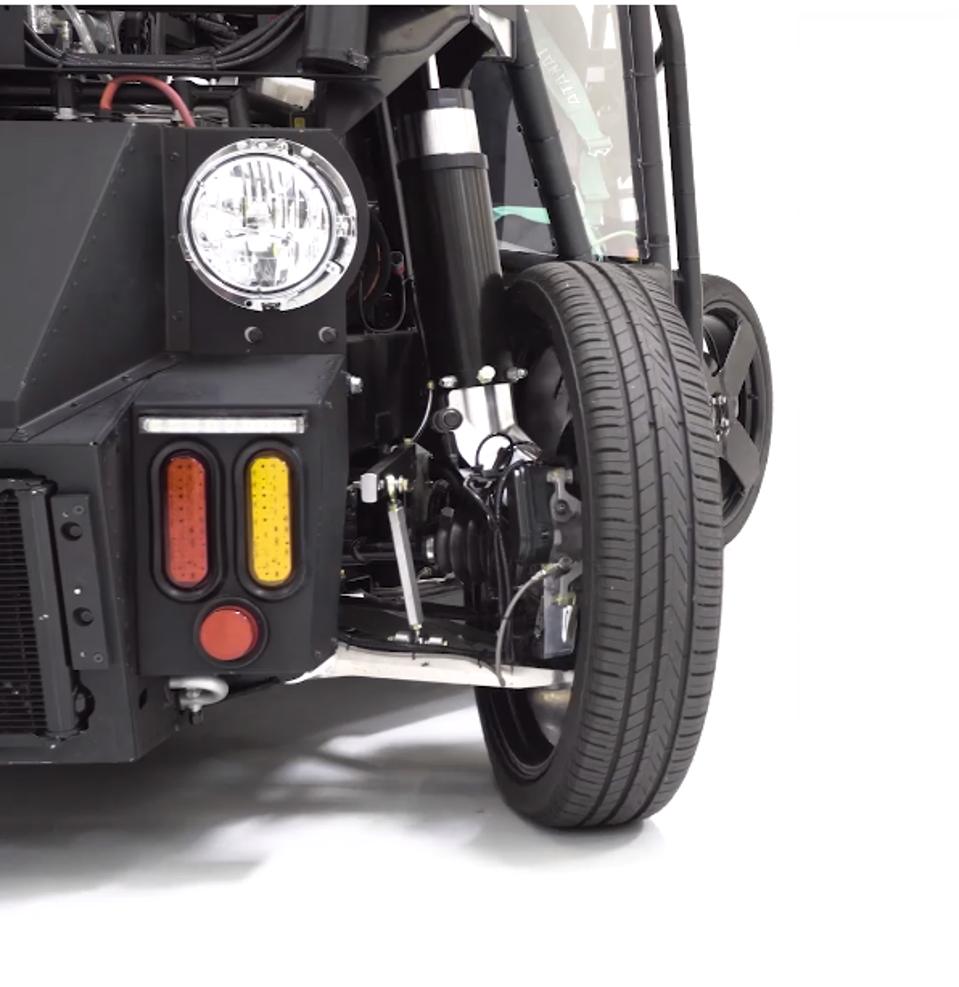
What a monstrosity that car is.
I like this move by Amazon. The robotaxi business (which probably won't be very "taxi"-like once it's done right) should be right up their alley. Once the software is built it is, after all, very similar to a logistics operation. And while building the software they should be able to collect a lot of data, from all over the world, by putting sensors on their delivery vans. They already have multiple data centers throughout the world, with unbelievable amounts of storage and compute power. Amazon is really perfect for this. I actually can't think of a single company that's better suited to build a robocar that can drive just about anywhere. Look out Tesla, who previously held that position. About the only place Amazon is lacking is in the manufacturing of the car (hardware) itself. Hopefully they can find a good partner for that, to collaborate with or to purchase.
But first they've gotta figure out a way to make the thing a lot less ugly.
James Williams
Sun, 2020-06-28 04:16
Permalink
Ugly Duckling
When was the last time you bothered to look at your package delivery person/thing?
FKA
Sun, 2020-06-28 07:21
Permalink
I see them a lot
Are you suggesting that it doesn’t matter what the trucks of a trillion dollar company look like?
Perhaps they came up with an intentionally ugly design so that they wouldn’t be tempted to keep it once they get ready to design the actual final product. It’d be interesting to hear about how that happened.
Also, what happened with the co-founder? I read that he was fired, but then his twitter feed suggests he’s not. Was he re-hired or something? (Maybe only fired from his executive position.)
FKA
Fri, 2020-06-26 21:27
Permalink
On-demand pickup
Not just on-demand delivery. On-demand pickup, of Amazon Marketplace and Fulfilled by Amazon items (and returns, which is probably small right now, but as it becomes cheaper they can offer more and more of the "try it before you buy it" items). Not sure if you're size 3 or size 4? Ship them both, try them on, and return the one that doesn't fit.
Rentals too. There are lots of things we use infrequently but are too much of a pain or expense to drive to and from the store whenever we need them.
It'll be an Amazon Locker on wheels.
(And how about things that are expensive to ship because they are large or heavy? Specially built vehicles should be able to deliver them at a fraction of the cost. Robots similar to the picking robots that Amazon already has will take the refrigerator or dishwasher or washing machine or whatever and deliver it right to the room in the house where you want it. And will pick up your old broken one to dispose of it.)
Add new comment