



When robocars must be perfect, and when they need not be
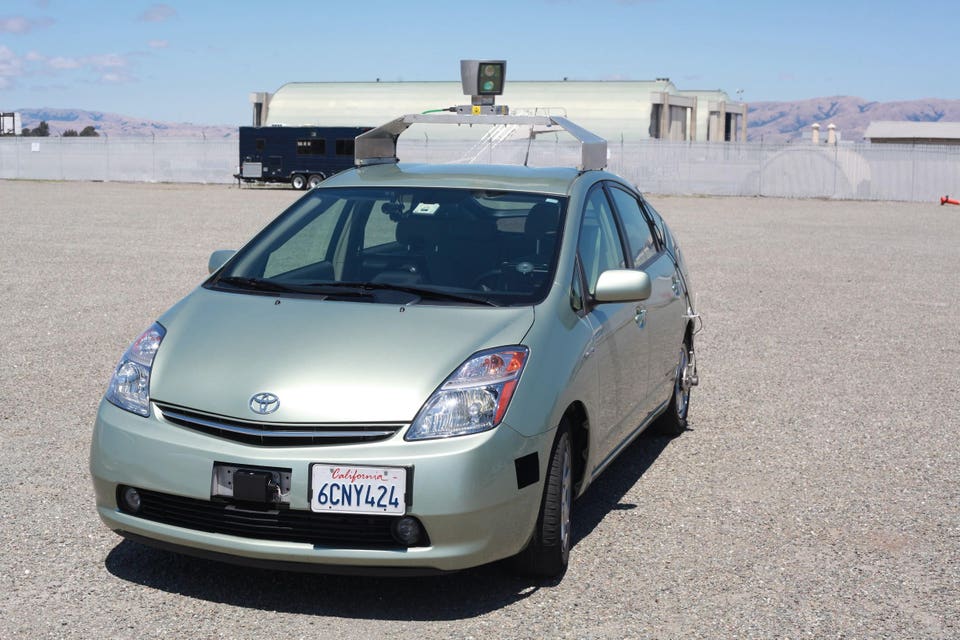
The recent expansion of Waymo One to more people, and the Tesla City Autopilot (known as FSD) beta have allowed users to experiment with these systems and to make videos of their experiences and they are interesting. Companies are learning things, since no battle plan survives first contact with the customer. We also learn things about customer attitudes.
Those customers are highly impressed with both systems, though at different levels. Waymo’s cars are effectively never making legal mistakes or done things to cause accidents and have not for over 6 million miles and counting. (They still aren’t quite up to top humans at avoiding accidents caused by others but are pretty good.) Tesla’s system is a “Driver Assist Pilot” which requires human oversight. When it does an entire journey without needing driver intervention, that is impressive by the standards of such systems, and particularly impressive that it does it on arbitrary roads, but still a different class of product.
One Waymo tester has been trying to challenge the cars which come to him with unusual pickup spots that take some figuring to get out of. He’s impressed they have figured them all out, but he suspects that they might be getting remote assistance in some of the cases, as though that’s somehow a let-down.
Needing remote assistance from time to time is the best — and cheapest — design for a robotaxi service. You must not require the remote assistance in any urgent safety situation, and indeed few remote assist systems even have the ability to remotely drive the vehicle the way you might drive a radio controlled car. But you want to use it in situations like getting out of parking lots, because it’s cheaper to have operators figure those problems out as they arise than to try to develop, test and certify automated systems to handle them.
In the early days of a project, a car might want remote assist fairly often. That’s good for testing, but not practical for a commercial service. Eventually, one will probably get it so that cars need assistance perhaps one minute out of 100 — which means that each remote operator can handle almost 100 cars. If they cost $25/hour, that still means just 25 cents/hour added to total operational cost, which means a viable business. Chances are the operators will actually spend more time doing customer service for the passengers than for the vehicle.
While remote operators don’t do emergency interventions, they can also be useful for handling times when the road has changed from the map, as happens with construction zones and rare events. While we drivers will see many construction zones every day as we drive, it’s actually a very rare event to be the very first car in the world, or even in a large fleet, to encounter this construction zone. If the car has very accurate maps, it is apparent immediately that the road has changed, and then the car can decide what to do.
Any car will actually have some limited ability to drive with a wrong map or with a very limited map. This is what Tesla does with their new “FSD” city Autopilot, it just makes errors pretty often that need driver intervention. A car with good maps will only need to use this ability in that very rare situation that it is the first car to encounter the changed road. After that first encounter, all other cars will know there is a change there, and what character of change it is, and whether they should avoid it or wait for it to be re-mapped.
A car seeing a surprise change can do a few things:
- It can judge that this new configuration is the sort of road it can handle (the way the Tesla hopes to handle every road.)
- If it’s the sort of car that can take input from passengers, and they are present and ready to do this, it could ask them for advice.
- It can pull over and ask a remote operator to make the decision of whether the car can handle it, or if the car should...
- Turn around and let everybody know about it.
Clearly you don’t want cars needing to pull over or turn around or worse, get so confused that they must stop where they are. Fortunately, such situations will be very rare because being the first is very rare, and not being able to handle the situation is more rare. After the first drives through, the operations team can examine the video and divert all other cars around the problem, and try to re-map it or dispatch mappers to it. Over time, road construction crews will be more careful about recording any planned construction jobs in computer databases in advance — they are supposed to, but don’t always do so. The more often they do, the less often even the first car will be surprised.
Many people have imagined that the goal of robocar development is to make a perfect vehicle that can drive all roads. After the US government defined 4 “levels” of self-driving based on the role of the human in the car, the Society of Automotive Engineers extended to a 5th “level” which was that perfect car that could drive anywhere and anything. In reality, one of the many ways these levels are a falsehood is that this is a science fictional goal. The existence of the 5th level is mostly to make it clear what the 4th level is — the only level that actually exists. It’s a car that handles a worthwhile subset of the roads, a subset big enough to be commercially and personally useful, but not so complete as to be impossible or ridiculously expensive. Even though it’s possible to make a car that can “give it a go” on just about any road, that’s different from certifying it’s safe on any road, and taking liability for any mistakes, as those who deploy a full robocar must do.
So welcome the remote operators. They can round out the edges and stop the perfect from being the enemy of the good. Full human thought can go into those non-urgent edge cases to make sure the job gets done.
The same is true in making the maps, as well. While everybody wants to be able to have software fully understand the road and make a map of it without human help, that’s a tall order. Instead, you get software to handle 99% of the road and leave the things it can’t figure out to humans. If you get the ratio down far enough, it’s highly economical to map the road and maintain the maps — but you also get the ability to use human insight when it’s really needed.
Robocar deployment should be compared with how we do it now — with a full time human behind the wheel, whether it’s a chauffeur or you driving yourself. Taking the effort level down to 1% of what it was does the job, and trying to get down to zero just has diminishing returns.
One caveat — remote operation requires a network. Fortunately we are building out our networks, especially in all the places where the roads are complex. And Elon Musk doesn’t just run Tesla, he also manages SpaceX, which is putting up a data communications network that will assure uptime anywhere you can see the sky. I won’t be at all surprised if many robocar operators choose to use a service like Starlink for their remote communications to their cars.
Originally published at Forbes.com in When Robocars Must Be Perfect, And When They Need Not Be. Copyright © 2020 by Brad Templeton.


Comments
David Collier-Brown
Mon, 2020-11-30 15:29
Permalink
Can we simulate a horse, instead of using "general" AI?
IBM prides itself on simulating the brain of a cockroach, and then a cat. I wonder if a simulation of a horse is not what one wants for a robot vehicle. A cat is not cooperative enough, a dog is too distractable, but a good simulation of the mind of a risk-avers grazer sounds like what I would like driving my car for me.
--dave
(Hi Brad, long time since Waterloo CSC)
FKA
Tue, 2020-12-01 16:11
Permalink
What is the alleged flaw?
And what's "the problem" that these companies are trying to solve?
I suspect that Waymo and Tesla are trying to solve a different problem.
brad
Wed, 2020-12-02 00:17
Permalink
Different problems
Well, Waymo strictly is aimed at Robotaxi. Tesla also wants to do that, but in addition wants to sell cars to customers -- and sees that as the path to the robotaxi. I don't know if Tesla has, or needs to have an opinion on which one is better.
Tesla feels that it's a waste of time to make a car that can't go everywhere. If they can make one fast, they are right. If they don't get the breakthrough they want then they are probably wrong. If they get it, but get it late, that's still good for them, although once anybody gets it, the other top-notch teams will certainly do it in much less time.
Particularly Waymo. I mean, they get the resources of Google, which employs both the creator of deep learning, some of the best minds in AI, and the DeepMind team which are the world leaders in reinforcement learning techniques by a pretty large margin. I would expect them to be able to duplicate what somebody else does in enough time to continue the fight. They are also the masters at big scale data, beyond anybody else in the world.
FKA
Wed, 2020-12-02 06:06
Permalink
the way I see it
Waymo is trying to build a better taxi service. Tesla is trying to build a robocar.
Tesla has made a car that can go anywhere. They're working on improving that car so it requires less human monitoring/input. Eventually I expect they'll allow that human input to be provided remotely, probably by tesla employees, at least in places with good enough reliable network connectivity. People with Tesla cars will have the best of both worlds. Passenger-only (or cargo-only) where available, ADAS FSD autopilot everywhere else. For long trips to a destination where passenger-only is unavailable, you can have your car wake you up when you get a few miles away. If you don't indicate that you're ready to take over, your car parks for you somewhere safe. A car should be able to go anywhere. Tesla's cars can.
Waymo hasn't made a car at all, and the taxi service they've made can't go very many places at all, and offers little benefit over Uber/Lyft (maybe a moderate benefit in the age of COVID). They hope to lower costs drastically, and maybe they will eventually, but it looks like it's going to take them a long long time to do so.
It's not clear to me what the problem is with Waymo. Is it really that hard for them to expand to more places?
Maybe it's primarily a regulatory problem...
Hopefully it's just the pandemic, and they'll be ready to roll out to dozens of cities shortly after the pandemic lifts. But then it's still a matter of figuring out how to drastically cut costs. I think having one employee for every 100 cars is a pipe dream, at least for the foreseeable future. And there are tons of infrastructure costs they'll have, both up-front and ongoing.
brad
Wed, 2020-12-02 15:31
Permalink
Caution
While in the past Waymo was called the reckless one (for testing on public streets without telling anybody) they are actually much more cautious than Tesla. That's part of why they have not deployed when Tesla would have in the same situation.
Tesla has not build a robocar that can go anywhere. They have built a driver assist system that can go anywhere. Huge difference. To put it in the terms of the former chief engineer on Autopilot, "You can't build a ladder to the moon."
Waymo's service today is cheaper than Uber, but only modestly. Of course on the one hand it really costs much more than that to run (as a prototype) but on the other hand at scale it will cost much less when you don't have to factor in huge NRE. There is no reason to make it that cheap yet, as they could not meet the demand.
It looks like the city of SF is their next target (after Silicon Valley.)
FKA
Wed, 2020-12-02 20:18
Permalink
supply and demand
I did not say they did.
At most only one of those two statements can be correct.
Add new comment