



Waymo Vs. Uber Vs. Tesla Vs. Amazon Vs. Others: Who Will Sell You Your Robotaxi Ride?
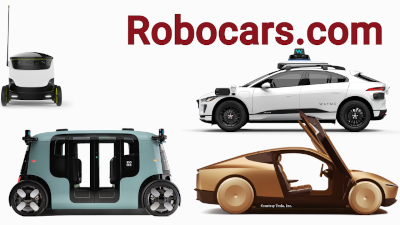
The agreement to merge Aurora and Uber ATG announced yesterday prompts the big question about just how the planned Robotaxi world will work. A core part of the deal was a strong relationship (though presumably not exclusive) between the new Aurora and Uber, its 26% owner. Uber has the top position in the world of selling rides — though Didi sells more rides but only in one country — and the robotaxi business is all based on changing the automotive industry from being about selling cars to selling rides.
So how strong and useful is that position for Uber? Why has Uber been able to hold that position when the barriers to entry aren’t clear? If it’s hard to unseat Uber in that space, do some special companies — in particular Google — have a special position which makes it easier for them?
The future of automotive will all turn on which app customers pull out to summon a ride. Earlier, I wrote a guide to all the potential elements of robotaxi competition and identified these key factors:
- Price — For many the most powerful factor.
- Wait Time — The most complex, with so many driving factors beyond fleet size.
- Territory — The subject of the coming land rush.
- Brand & Style — The current biggest competitive element.
- Luxury and Features — The small stuff can be big.
- Innovation — Being ahead of the curve.
- Customer Service — How well they treat people and cities.
- Pooling — Can you efficiently combine rides?
Today, people pull out the Uber app most of all, though Lyft continues to grow in tandem. In Asia, Uber lost to companies like Didi and Grab — in the first case with the aid of the government, but not so much in the second. Why do they use Uber? It’s trivially easy to use a competing app in most cases. Uber is larger, but it turns out that having a larger fleet isn’t nearly the advantage it seems — what really governs service is the ratio of customers to available cars in the area. A smaller company with fewer customers and fewer cars can offer the same level of service if it gets over a basic threshold, which Lyft has done.
Presuming Aurora can deliver, Uber now can put Aurora-driven vehicles into the Uber fleet. It can buy and own vehicles made by contract manufacturers with Aurora driver installed, or it can let others own and manage those fleets who may, one might speculuate, have to agree to make them available inside Uber in order to get Aurora driver. Possibly exclusively inside Uber, or possibly simultaneously available in other networks too.
Human drivers and anywhere-to-anywhere
Uber, Lyft, Grab and a few other companies doing this have to decide how to combine their human-driven services with their future robot-driven services. The simplest plan would be to offer two options — if a robot is available for your route, you can agree to that or ask for that and presumably get a much lower price for your ride, probably starting at $1/mile compared to $2/mile for human driven.
Alternately, Uber could take the bolder step of selling all rides at $1.50/mile, for example, subsidizing human drivers with the robots to offer a unified “anywhere to anywhere service.”
Companies instead may also offer other pricing styles, including monthly subscriptions, which will, to be attractive, offer anywhere-to-anywhere service service. One needs to offer that to convince people to give up car ownership for robotaxi service, which is key to truly upending the old automobile industry.
Upstarts, even Google/Waymo, do not have a human driver service to take you between locations not in the service area of their vehicles. Without addressing that, their services can’t be a car replacement and customers will need to also use a different company for those trips. On the other hand, it may not be hard to get a company who will provide that for a small margin. (Though since Uber, Lyft and others all have their own robotaxi aspirations, maybe it will be harder to get a partner than a company would like.)
Google is a special animal, though. While most investors have not felt it would be easy to compete with Uber, Google is a much bigger company than Uber with a better brand. More than half of Uber’s customers summon Ubers with Android phones, the rest with iPhones. Google Maps and Waze are dominant in use by people on the move. Of all companies, if Google wanted to build a service like Uber, they would be the best positioned. Apple has a similar position (its robotaxi ambitions have waxed and waned and mostly been kept under wraps, but they are there.)
Google has a strong position, but what about the others? As big car brands ponder their futures, they will remember that they do have strong brands. A mobility service with a “Mercedes” or even “GM (Cruise)” brand on it could get immediate acceptance. They have, however, the fear that any accident under their brand could hurt the entire precious brand, while a Waymo accident (or even a Google branded car accident) doesn’t stop people from advertising with Google.
Tesla’s brand is new, but also very good. Tesla claims that once they have a real true full self driving product, they will open up a “Tesla Network” where ride-hail is done with Tesla owned vehicles (which it will take back and modify when they come off-lease) and private vehicles that owners authorize to do taxi rides when not in use. That prediction is still somewhat fanciful: Tesla isn’t close yet to actual real self driving, and it’s unclear if they ever will with existing hardware, but this is their plan.
Tesla’s advantage, though, is by using off-lease and owner vehicles, their hardware cost will be much less than that of other companies, and the hardware depreciation is a large part of the cost of running a vehicle once you are doing it in quantity and pricing it at a competitive price. Tesla could be the leading competitor in a space on price.
Zoox has no brand with the public. To compete, they will really need to convince customers that their custom vehicle makes a ride that much better. On the other hand, Amazon has a huge brand, but unrelated to mobility. But even with no brand there, it may not be that hard a job for Amazon to declare, “Just use the Amazon app to get a ride. Ask Alexa for a ride from home” and for people to readily switch from Uber.
Indeed, even companies with no brand, but lots of money, can probably get people to use their app if their service is up to snuff. All is not lost for the other players, even if Uber has a current leg up. As long as people are paying by the mile or by the ride, switching from service to service will be easy, reducing barriers to entry. This is why subscription pricing models will be pushed, because they create barriers to switching. Companies may even subsidize those models just in the hope of locking in customers.
It should be noted that Didi is bigger than Uber just with China. It seems unlikely any non-Chinese player will be able to win in China, so most of this analysis is about the rest of the world.
If there’s competition
All of this, of course, presumes there is competition. There will be competition in just a few places at first - San Francisco Bay, New York, Shanghai and perhaps a few others. Since starting service in a town will be expensive in both money and human time, at first, companies will simply start up in virgin territory rather than compete on day one. In a new city, with no competition, you can charge $1 or even $1.50/mile and compete with $2/mile Uber service. Head to head, prices will fall below $1/mile and subscription models will arise. But for the 2020s there may not be much competition which allows many companies to thrive.
Comments can be read/left here.
Originally published at Forbes.com in Waymo Vs. Uber Vs. Tesla Vs. Amazon Vs. Others: Who Will Sell You Your Robotaxi Ride?. Copyright © 2020 by Brad Templeton.


Comments
FKA
Wed, 2020-12-09 05:24
Permalink
taxis
Hopefully in a few years I'll almost never need to hire a taxi, because my car will be able to drive itself during those times when I can't drive it.
FKA
Wed, 2020-12-09 07:33
Permalink
Paying more for a human driver, and hybrid mode
Why would people pay more for a human driver? If anything I would think robot drivers would cost more. More likely it'll just cost the same, though, if both are even offered. (Maybe you'll have a choice: Robot only, human-driven only, or first available. Might make sense if there are areas served that require human drivers. The human drivers could then serve people who choose "first available" when they're not needed elsewhere. I'd probably usually choose first available, but might choose robot only if I want my privacy or if I have a 3+ passengers and want extra room. Maybe human-driven only if I'm away from home and want to chat with a local, but it's hard to think of a situation where I'd choose that. If demand for it is too low, and it probably will be, human-driven only won't be an option. Maybe robot-only or first-available will be the only two options.)
One thing you don't seem to have mentioned is the possibility to rent a robocar that you can drive yourself. That may be the best of both worlds until we have robocars that can do everything a human can do.
While I say above that I don't expect to use a robotaxi very much, I might rent a robocar from time to time, if I'm out of town without my car, or if the rental vehicle can do a lot of things that my regular car can't (including technologies like self-driving but also things like hauling large objects or seating six comfortably or going 500 miles without charging or camping in the back or on top). Maybe you could call some of them hiring a robotaxi service. Renting a car that seats six for half an hour to take the office to lunch is essentially a taxi service. Even then I'd expect much more flexibility than taxis traditionally give you. (It might take us 15 minutes to get in the van.) The lines between taxis and rental cars blur when the car drives itself.
Rentals will become so much better when pickup and drop off can happen at a convenient time and in a convenient location, because the car can drive itself between the storage area and that convenient location (even if it can't drive itself everywhere you need it to be).
If, as you suggest, depreciation on these vehicles will be primarily by-the-mile, the hourly rate to rent them when you're not driving should be low.
Maybe driverless robocars will quickly move from "available in limited locations" to "available just about everywhere," but if not there will be a strong market for renting a car that can be used both in robocar mode and in ADAS mode.
brad
Wed, 2020-12-09 11:20
Permalink
Cheaper than numan
Well, you project that the robot won't be cheaper than a human driver, but others are investing billions on the idea that it will, in time, be quite a bit cheaper.
FKA
Thu, 2020-12-10 02:04
Permalink
supply *and demand*
The price to consumers is different from the price to suppliers.
Time and time again you seem to misunderstand that.
Which is cheaper to the grocery store shopper, self-checkout or human checkout?
Add new comment