



What must robotaxis do to make people give up car ownership?
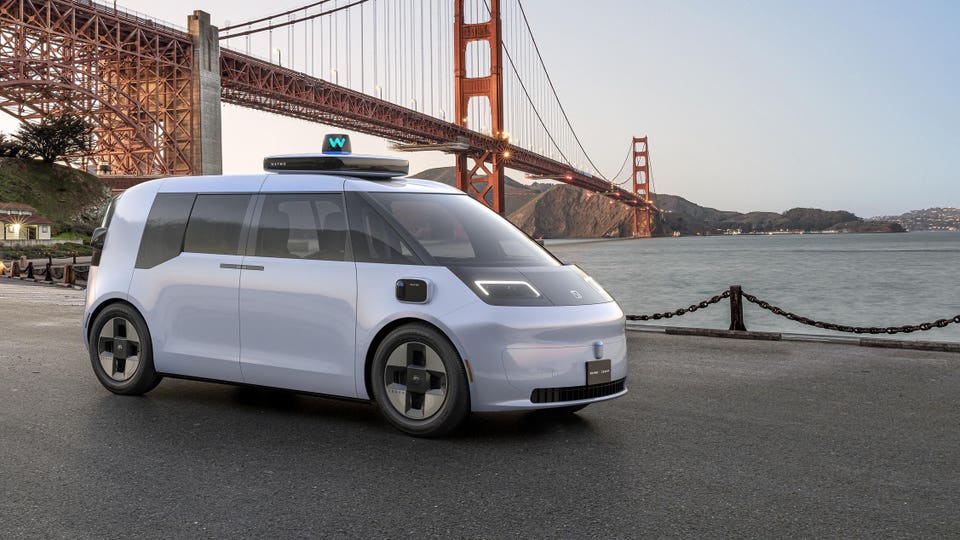
Most self-driving players are aiming to build a robotaxi (and even Tesla recently announced even more effort on that plan, though they also remain dedicated to selling a self-driving car to consumers.) None of them, however, are spending billions on this simply to become a better Uber, just as Uber which is now many times the size of the old taxi industry, wants to simply be a better taxi. To move beyond that, they need to become a car replacement, so that some consumers decide that rather than buying a car (in particular at first, a second or third car) they will rely on a collection of services, particularly the robotaxi.
There are a number of techniques companies will need to do to win that game, including partnering with other forms of transport. In addition, particularly in the early days when nobody is big enough to rule it all, there will be call for cooperation between companies. You might find yourself starting your ride in a Waymo and finishing it in a Zoox — possibly with a human driven van in between!
Robotaxi services will operate in services areas. That’s partly because handling a limited service area is a tractable but still lucrative problem, and because even if you reach the holy grail of driving everywhere, you don’t want your cars wandering hundreds of miles from base.
Once you get customers to replace their cars, you tap into the entire revenue of the full automotive value chain. You are the car, the fuel, the maintenance, the insurance and everything else. That’s $5 trillion to play with around the world. If you customer still owns a car, they will be inclined to use it most of the time — in fact, they are wasting it if they don’t. Competing with the “full cost” of private car ownership (around 50-80 cents/mile) is doable. Competing with the incremental cost of a car you already have (mostly fuel, parking and a dim perception of maintenance and depreciation) is harder.
Beyond the service area
If a customer wants to travel outside the service area, there are a few options:
- Tell them to do it on their own, but they wont think you are good car replacement. However, they might accept you as a replacement for a 2nd or 3rd car.
- Offer carshare services, and take the customer to their carshare car and provide a seamless transfer to it, likewise on the return. They drive the car outside the service area like a rental car.
- Offer human driven taxi service for the whole trip, or drive them to the edge of the service area where a human driven vehicle is waiting. Slight delay for the transfer
- Take them to transit going their way. This will be a transit experience but may be superior if the transit has dedicated track or is high speed rail. Try to make it as seamless as possible.
- Offer self-delivering car rental, where the robotaxi can be human driven, but comes to them on its own. No transfer needed.
- Partner with another robotaxi service with an overlapping service area, and arrange a seamless (no-wait) transfer in the overlap.
- Partner with another robotaxi service which does not overlap, and create a seamless bridge between the two areas.
All of these are inferior to a door-to-door robotaxi ride, and many of them will cost more (particularly if you offer a human driven ride rental car.) As such, they need to be fairly rare events. If a customer commutes outside the service area every day, it is probably not practical to target that customer for car replacement.
While “transfer” is a dirty word in public transportation, it need not be with robotic transport. Transfers usually mean you had to go out of your way to the transfer point, and there may be long walks and delays, along with unpredictable transfer times. These need not happen with robotic transport. The vehicle you transfer to can be sitting waiting, and your vehicle can park right next to it. The transfer can be measured in seconds, not minutes. The transfer location can be right along the optimal route, so there are no detours from it. The ride is no longer a nonstop door-to-door ride but it can be very close, as is needed for credible car replacement.
Partnering and bridges
While robotaxi companies may be seen as competitors, it can be in the interests of both to work together, particularly when their service areas are not the same. Both companies will gain by being able to improve service to their own customers. Later, when they go head to head, the partnership might end.
An interesting approach is the bridge between two distant service areas. Waymo and Cruise are handling San Francisco. Waymo is expected to do Silicon Valley but not necessarily San Mateo county in between. Another company might decide to cover Berkeley and Oakland across the bridge.
If we consider Waymo doing SF and Silicon Valley, they could set up a van-bridge which would run frequently between the south end of SF and the north of the valley. A rider wanting to go between two points would ride a robotaxi in SF to the bridge point, and board a waiting van departing in less than one minute for a seamless transfer. This van might carry 10-15 people, making it very efficient. So efficient, in fact that it could have a human driver if that is necessary. Most of the miles would end up efficient and shared on the highway. At the other end, robotaxis would be waiting for each destination the passengers have — at rush hour, many might have the same destination. Again there would be a seamless transfer with 20 feet of walking and no delay, approaching the desired qualities of the private commute most people do.
With the van handling only the highway portion, most riders would barely deviate from how they would drive a private car for the trip. The trip might actually be superior, with no need to drive, and the van getting access to the carpool lanes.
By using vans, rather than larger buses (or the train) the vans can depart very frequently for a non-stop highway trip. This is important in assuring there is almost no wait for the transfer. It can be tweaked a bit by adjusting initial departure times — if the chosen van is only every 5 minutes, you delay departure to make arrival just in time (with some margin for traffic issues.) The rider will feel it was seamless and any departure delay was at home, not at a station.
Waymo’s parent/sibling Google runs a large fleet of buses to bring staff from San Francisco and other areas to their HQ. Employees love the trip because it is non-stop but it’s only at rush hour and it doesn’t leave every minute. A bridge service like this might efficiently handle employees for many companies. In particular it could do it at all hours of the day, not just at rush hour. (Direct buses to companies served by first mile robotaxis could also do the job, though they can’t leave every minute so they would constrain trips to particular schedules.)
While most robotaxi efforts have been early adopters of electric powertrains, a common criticism of the robotaxi world is that it’s still mostly unshared cars. Approaches like this can introduce sharing for the core central miles without the usual compromises of shared transit which make people avoid it for the more expensive choice of a private car.
In many cities there are people who give up car ownership and rely on just transit, cycling and even walking. Even more have given up car ownership when tools like Uber were added into the mix. Robotaxis, especially with services like those above, will be able to seduce even more people away from car ownership, but the big question is, how many?
In the comments, let us know what it would take for you to give up ownership of a 2nd car or all cars, based on where you live.
Originally published at Forbes.com in Robotaxi Services Must Go Beyond To Be Car Replacements, And Maybe Even Link Up. Copyright © 2022 by Brad Templeton.


Comments
ricky
Tue, 2022-04-26 15:14
Permalink
it is driven by cost and needing to pee
all travel, 24x7 access on my schedule for less than 250$/month unlimited mileage. I lower car costs by buying used and taking care of my cars so I can get every last mile of use out of them.
local is about 100 mi/week
weekend travel to isolated central and western mass (frequently without cell service). sometime need to carry 100lb of telescope kit.
1-2 x per month, make trips 4-9 hrs away from Boston and back.
I have my routes mapped out including where I take a pee break whether i need to or not.
I enjoy riding in solitude. I usually don't play radio or stream music. just the quiet of the car on the road in the deep dark of the night.
brad
Tue, 2022-04-26 18:18
Permalink
400 miles/week local
That would be easy. The long trips out of town are going to be rental car, not robotaxi at first, but that's probably a bit pricey in car rental to fit in $250/month. On the other hand, if they put you in a luxury shared vehicle to the remote city and you use robotaxi there, I can see it happening. Astronomy trips to remote territory will certainly be outside of robotaxi service area for a while. That's plain rental car. One day's rental car is usually $60 plus gasoline and they can probably get it cheaper for you, so a dozen of those each year sounds doable.
One factor to consider, if you park your car in your garage, you just recovered a bunch of extra storage or workshop space in your house.
Russell de Silva
Sun, 2022-05-01 15:20
Permalink
Ability to specify a suitable vehicle for the purpose
For 2 car families like myself it would likely be a 2 stage process.
Initially the service is likely to be geo-fenced so the service could replace commuter trips and visits to family and shops. We could sell the second car and reserve the first car for activities like beach trips, hiking, and holidays.
The service provider using rentals for trips outside its region might end up being much cheaper than standard rental rates because of economies of scale and the fact that the paperwork only need to happen once. In addition as you probably said, the rental might also be a robotaxi that can self deliver and then be human driven for part of the trip. The self delivery and drop off removes both a cost to the rental company and an impediment to the renter.
To lose the second car, availability of the right vehicle at the right time is going to be important, for example, I go surfing and would need a vehicle with a roofrack (for the longboard) or one with a suitable cargo area when I take only the shortboard.
I would also be happy for this to be pay as you go rather than built into the subscription.
When the service area expands to include my favourite surf locations it would probably be nice to hire the vehicle for the duration of the trip, so I can leave clothes/towel/phone in the car. I imagine this would happen naturally anyway as it might be quite hard to redeploy the taxi to serve someone else from such a location. My surf trips are usually 3hrs or so, but for whole day trips to the beach the use pattern will be similar to a daily commute, off to location x in the morning and back home in the afternoon/evening with a similar dead head miles issue.
If it turns out that the taxi can be redeployed then I might have to invest in some sort of secure storage box with combination lock I can leave at the car park with stuff I don't wish to carry to the beach.
FKA
Fri, 2022-06-03 04:40
Permalink
Make car ownership illegal?
I was just thinking about this yesterday when I noticed that some soda spilled into my cupholder. What would a robotaxi company do? Fine me? Leave the mess there for the next person? Charge everyone more for the constant cleaning?
You’re not going to get me to give up car ownership. Why would I give up my car (which is only worth a few thousand dollars)? Makes no sense whatsoever.
brad
Sun, 2022-06-19 02:15
Permalink
Clean the car
Nobody will be forced to give up car ownership I think (at least not for a very long time) though some forces will push things that way (properties with no parking, robocar only zones etc.)
For cleaning, I think the car will have sensors (like a camera used between rides) to detect messes and damage. It will mostly use these to tell you you left something in the car but also to bill riders for messes, and send the car to a cleaning depot when needed.
It is possible that the cost of ordinary messes will just be built into the price and only big messes like throwing up etc. will get you a bill.
Alternately, people who enter a car could immediately report a mess, which gets tagged on the prior rider and they get a different car dispatched if not in an urgent situation.
FKA
Tue, 2022-07-12 05:35
Permalink
Making people give up car ownership
I agree nobody will likely be forced to give up car ownership any time soon. But your question asked how robotaxis could make people give up car ownership. Force would be one way. Maybe losing billions of dollars running a service at a loss is another (that could work until the market demands profits)?
So not only do I have to pay a fine for that spilled soda, I also have to pay whether I spill the soda or not, for sensors to detect spilt soda?
Taxis are great when you need a taxi. For everyday driving, a personally owned car is so much better. And when you add in all the overhead (cleaning depots and spill detectors are just two from a very long list) it’s probably often cheaper too.
Robocars might even reduce the need for taxis. No need to pay for expensive parking at the airport when your car can just drive itself home after it drops you off. No need for a taxi to the rental car place when the rental car can pick you up.
brad
Tue, 2022-07-12 08:53
Permalink
Pay for the sensors
The sensors (a camera) would be of quite minor cost, not one anybody would notice.
A private car has a number of advantages, but a number of disadvantages. Already there is a decent segment of people in cities with good transit who elect not to own cars. There will be more of them in a city with inexpensive robotaxi service.
I generally don't pay for parking at the airport any more and haven't for many years due to Uber. If I am going to a further airport for just 1-2 days I might pay for parking.
Add new comment