



Tesla raises FSD price to $15K. Could it mean they might buy a way out?
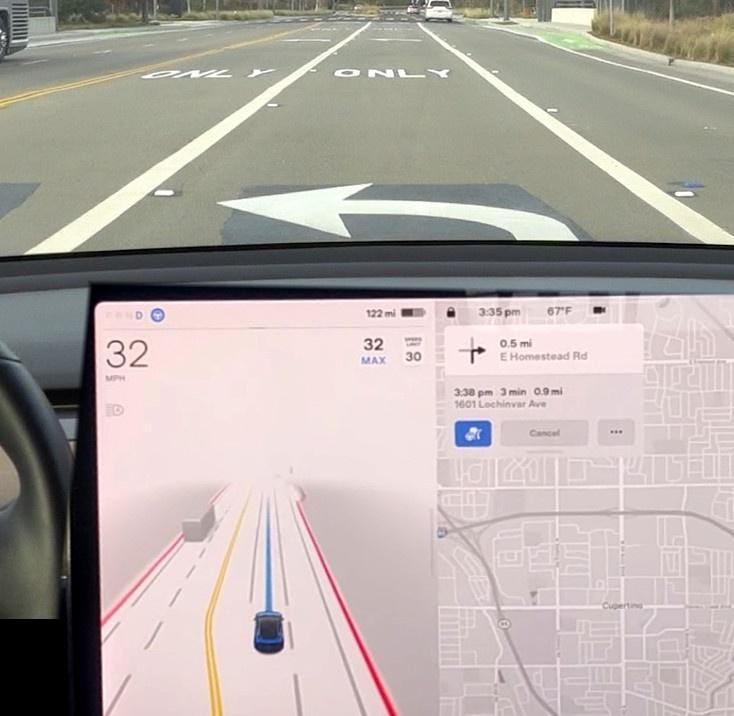
Tesla recently announced that the price to buy their “FSD” package, which includes a small package of automation features plus a prepaid pre-order of an actual self-driving system when it is ready, is going up from $12K to $15K on Sept 5th. Those who pre-order before that date get the old price. The sale of this product is quite unusual in global industry, and the take-rate for it has been dropping as the price has risen. This opens up questions about why the price continues to rise, why people buy it, and what strategies it opens up when the price is this high — including one strategy which suggest they be enacting a contingency in case the project does not succeed.
The Tesla FSD package is one of the most unusual commercial products. The price has raised over the last 4 years, from $2,000 on top of the Enhanced Autopilot, to anywhere from $6,000 to now $15,000 over the basic autopilot. Paying the fee does include the features of the Enhanced Autopilot — now available for $6,000 on their own — but is mostly bought to be a pre-order of an actual self-driving upgrade which combines updated software and, in the case of older cars, an update of the car’s internal processor.
Tesla has forecast that this self-driving product will be ready to ship very soon, with Elon Musk famously making predictions that it will be ready within a year for the last 6 years or more. This prediction has again be made this year, with caveats that it will require regulatory approval. Most customers do not anticipate these predictions will be accurate any more, but they still are keen to get the product should it arrive.
The price goes up
Tesla has said people should expect price increases as the product progresses, and that when it finally ships it will be much more valuable than the current price, and thus much more expensive. It’s true, a car with full self driving ability could easily command a $15,000 premium over a regular car, particularly if it does not have competition. This prediction (which has borne out) of increasing prices is one reason that customers buy it — buy it now and, in theory, save some money when it releases.
Tesla takes in a lot of money from these buyers. Because it has not delivered the product, it is not able to recognize all of it as income, though it can recognize income for part of the fee for the initial features such as Navigate on Autopilot, Auto-Parking and automatic lane change. Most drivers find much less value in features like “smart summon” (or even regular summon) and not all like auto lane change and navigate on autopilot. Indeed, these recently were bundled as a new release of Enhanced Autopilot at $6K which would allow recognition of that much of the revenue.
The FSD package also is required for the opportunity to enter Tesla’s badly named “beta” program for the self-driving “autosteer on city streets” function. This is still a prototype (not yet a beta) but it’s interesting and exciting to many drivers. Not all people who buy the package enter the program. You must enroll and pass a “safety score” test where the car watches how you drive for a few weeks and scores some sense of how safe you are. Many drivers feel being in this program is part of the value they are paying for, while technically it is not a product. Indeed, the higher take rate in the USA (where the “beta” program exists) might be explained by this. In China, on the other hand, the take rate is very low and discounts are sometimes offered of up to 50%.
Tesla buyers can add FSD when they buy a vehicle, or after they buy it. They can even add it to a used car they buy from Tesla or a private seller It costs the same in both cases. They can also pay a monthly fee of $200/month to access it.
Uptake goes down
Studies from “Troy Teslike” indicate as many as 46% of Tesla buyers bought FSD in March of 2019 when it cost $2,000 to $3,000, but has dropped to 7% worldwide with the cost at $12,000. The uptake is higher in the USA, at around 14% and much higher among purchasers of the expensive S and X models of Teslas. The overall purchase rate is impressive, but the way it has dropped with time suggests Tesla is not making more money per car sold at the higher prices.
If Tesla doesn’t make more money from the price increases, they can still use them to convey a strong impression that the product is improving and thus its present value is greater — and it is indeed improving, though still nowhere remotely close to being ready to ship. While Tesla fans who have not encountered other self-driving cars may imagine Tesla is in a good position, Tesla is still not even in the same league as the major self-driving teams, absent some major breakthroughs.
The low resale price of FSD
One disturbing indicator of the real value of the FSD package is its value in the resale market. If you trade-in your vehicle to Tesla, they give you nothing for the expensive FSD package you bought — after all, it’s just a bit they flip in the software to them. When they resell a Tesla traded in with FSD, they remove the FSD and ask the new buyer to pay the full price to add it again if they want. This can be the case with software in the way it can’t be with a bigger battery. If you sell your Tesla in a 3rd party sale, however, the buyer gets the FSD package.
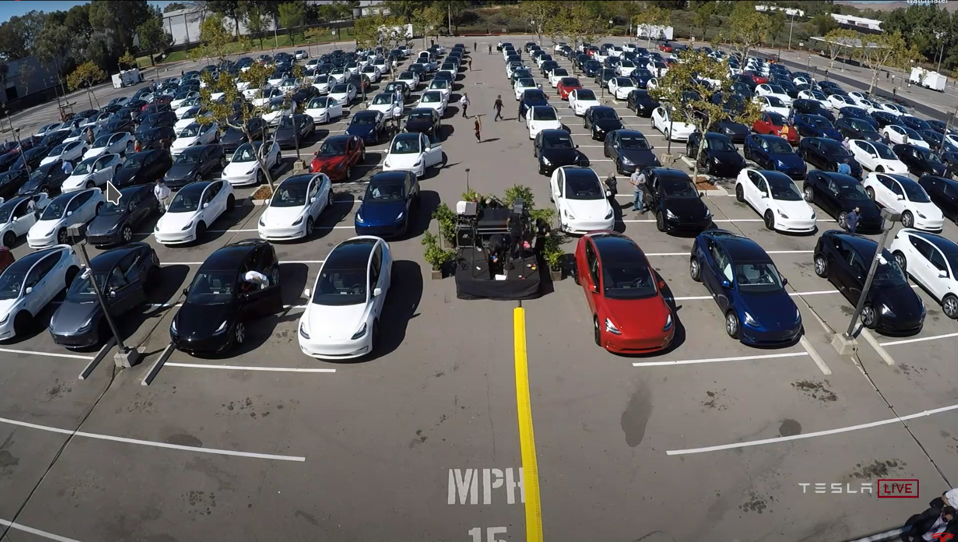
Analysis of used party Tesla sales shows results are all over the map. Some buyers will pay more for FSD cars, and it is reported that they sell for an amount that’s about 25% of the price to add FSD to either a new or used car — under $3,000. It is not unusual to see Teslas on the used market selling for a very similar price with or without FSD. This has led the various companies which provide estimated values for used cars to add modest value for the option. A query of the Kelly Blue Book on a 2020 Tesla Model 3 SR+ with 20K miles shows a difference of $4,300 for the $12,000 option. This is striking when some people are buying used Teslas without the package and then paying Tesla the full $12,000 (soon $15,000) to enable it, yet others are getting lucky and finding a car which already has it for a very modest premium.
As a piece of software, Tesla FSD doesn’t depreciate with time like the battery pack or motors. In fact, its price has gone up. In addition, due to recent shortages, used Teslas are selling for more, sometimes much more, than new Teslas, because there is a long wait to get a new car. Most recent Tesla buyers are reporting selling their cars used at a profit. As such, it is odd for the software package to have “depreciated” to just 1/4 to 1/3rd of its purchase price.
The value of a product is what people will pay for it, but it’s hard to say what that is when what people will pay varies this much. One is reminded of Time Share properties, which typically sell “used” for around only 20-50% of their “new” price, even when real estate prices have risen.
An interesting option with expensive FSD
There is much debate over if, or when, Tesla will deliver an actual real true full self-driving product. There is also debate over what the price will move to when it happens. Tesla says it will go way up, but in fact, unless they are the only company to succeed, they will have to sell it for whatever competitive price the market will permit. If GM sells their Cruise-based self-driving for $10,000, Tesla can’t sell theirs for $30,000 very easily. Today, when there is no product and thus no competition, there are no such constraints on the price.
Tesla may also fail to deliver the product — though that’s different from having to admit they can’t deliver it in a reasonable time. As time goes on they may face lawsuits over selling the product and not being able to deliver. In that situation, one option would be to offer refunds, presumably with interest. They might be able to only refund the difference from the “Enhanced Autopilot” though customers could argue that they never accepted the price for that product. They might give a full refund to any who contest this, stripping them of all advanced features in the hope that they will not want to lose them all. They can adjust the refund price until customers are happy, though they will take a long time to admit such a failure, and it would hurt their stock price.
Buy it
The other interesting option is one Tesla has a special ability to take. With their huge stock price, more than most other car companies combined, they can easily purchase any self-driving car team other than the top leaders, and maybe even one of them. Those teams are working with more advanced sensor packages, including LIDAR and radar, in addition to the cameras Tesla uses. Those teams are all working to get that hardware package reasonably priced, in the range of about $5,000, and some claim they have already done this, and many aim for $2,000 — and that is the normal trend in any digital/electronic product in quantity.
Tesla could then take this working self-driving package, and upgrade the hardware in customer’s cars. While it would be an admission of failure to accept LIDAR and another software stack, it’s better to do a $6,000 hardware upgrade and pocket $15,000 than to give a refund. The main challenge is that Teslas don’t have easy places to mount a nice LIDAR suite — they would have to put it in the rear-view mirror, headlights or front “grille” or mount a sleek rack along the top ridge of the glass roof, which would cost some range. But they could do it. At this price they would make a nice profit. For people who got FSD for only $3,000 they would lose some money, but the new customers would make up the difference.
Of course the newer customers would get a car redesigned to include these sensors and the acquired software.
This puts Tesla in an enviable position. They have sold hundreds of thousands of people self-driving cars for a price that’s well over what it will cost to provide it. Tesla wins if their own team makes FSD work, and they also win, just not as much, if any other team accomplishes it and can be bought with Tesla’s expensive stock. They might not be able to buy Waymo (though don’t count even that out) but there will be some player they can get. They only lose if nobody pulls it off, or if only Waymo or Apple does it and refuses to sell. (Alphabet and Apple are companies even Tesla can’t afford to buy.) If several teams have success then Tesla can easily do this.
If no team has success, then Tesla can keep working, with no need for a refund. If nobody else has done it, Tesla can claim they are not late, and so nobody gets a refund yet. The price can even keep going up.
Sometimes it’s nice to be top dog.
This is only speculation of course. Elon Musk probably still believes fully that his team will pull this off, and be the first. But it’s an interesting alternate path which is better enabled by the price increases. Maybe, just maybe, they now realize (as Elon tweeted) that the problem is very, very hard, and they’re creating an escape route. Everybody else out there is spending investor’s money building self-driving. Tesla is actually making money selling it before they have it. You can sell something even if you’re going to end up buying it from elsewhere.
Originally published at Forbes.com in Tesla Raises ‘FSD’ Price To $15K. Does It Signal They Are Giving Up?. Copyright © 2022 by Brad Templeton.


Comments
Anonymous
Wed, 2022-08-31 18:51
Permalink
China may determine the future of Tesla.
China may determine the future of Tesla.
Anonymous
Wed, 2022-08-31 18:55
Permalink
Biden Blocks Chip Exports To China
Biden Blocks Chip Exports To China
Anonymous
Wed, 2022-08-31 23:26
Permalink
How will "success" be defined?
Keep asking yourself, how will "success" be defined?
Anonymous
Thu, 2022-09-01 09:44
Permalink
Tesla loyalists posting Blume seeks Cariad
Tesla loyalists posting Blume seeks Cariad software development bailout with deeper involvement from Bosch and Continental Group.
Anonymous
Thu, 2022-09-01 09:51
Permalink
Continental
Continental is now apparently also to play a decisive role.
The corporation will develop the so-called middleware of the VW OS, according to industry sources.
Anonymous
Thu, 2022-09-01 10:15
Permalink
Handelsblatt
Continental may now play a decisive role alongside Bosch to accelerate software development. The DAX listed Group will develop the so-called middleware for VW’s operating system, writes Handelsblatt, quoting industry sources. The middleware enables data exchange between the software and hardware of a car. Neither Continental nor Cariad commented.
Anonymous
Thu, 2022-09-01 20:31
Permalink
Is ApexAI a company to keep your eye on?
Is ApexAI a company to keep your eye on?
Anonymous
Sat, 2022-09-03 10:21
Permalink
a valid point?
Only 3% of cars in CA are electric and already the electrical grid can't handle charging in peak times. Yet CA politicians want to force the other 97% to be electric too? Where will the power come from?
brad
Sat, 2022-09-03 15:22
Permalink
Not a problem
This is a very common misconception, so I will write an article about it shortly. It is never intended to charge cars at peak times, and there is an immense of power available off-peak to charge all the cars, and there will be more long before we get high penetration of electric cars. It's almost the exact opposite of what people write, which is because certain parties are deliberately lying to you.
Anonymous
Sat, 2022-09-03 17:00
Permalink
helicopter money - $90,000 and $240,000 per vehicle in rebates
ISEF (Innovative Small E-Fleets), is designed to grant incentives to California companies with 20 or fewer trucks operating in California and less than $15 million in annual revenue. These companies can get between $90,000 and $240,000 per vehicle in rebates to electrify their fleets. Also open to non-profits and companies that help service disadvantaged communities - these companies can get an increase in their rebate voucher as an additional incentive.
Anonymous
Tue, 2022-09-06 09:24
Permalink
RIP Mobileye - Apple has hired Gregory Baratoff
Apple has hired Gregory Baratoff, the former VP of Autonomous Vehicles Lab at Hyundai MOBIS, to be the Sense Architecture Lead on ProjectTitan.
It was revealed today that Apple hired the VP of Autonomous Vehicles Lab from Hyundai MOBIS, Gregory Baratoff – and his LI profile indicates that he was officially hired in August. Prior to his five years at Hyundai MOBIS, Baratoff spent almost 12 years at Continental Corporation in Germany as Head of Camera Sensors Development. This is another high-profile hire for Apple's Project Titan.
Baratoff's field of expertise, as listed in a South Korean article, includes camera advancement development, image processing, vision algorithm and camera sensors. Below Baratoff is pictured with along with his Hyundai MOBIS autonomous vehicle team of engineers.
At the end of the day, Gregory Baratoff is yet another major hire for Project Titan along with Luigi Taraborrelli from Lamborghini, 31-year veteran from Ford Desi Ujkashevic, Dr. Manfred Harrer from Porshe AG, Dr. Anton Uselmann from Porshe AG and others from BMW and Tesla.
The basic discovery that Apple hired Baratoff was announced in Mark Gurman's Power On newsletter this morning where he mainly recapped what he expects to be introduced on Wednesday morning. Like with many Apple fans, I'll wait for the Keynote instead of the last blast of chasing rumors.
Anonymous
Tue, 2022-09-06 09:49
Permalink
Baratoff's Medium blog
Baratoff's Medium blog shows much interest in AI.
eg
DeepMind Paper Provides a Mathematically Precise Overview of Transformer Architectures and Algorithms.
Anonymous
Tue, 2022-09-06 09:57
Permalink
More details
www dot patentlyapple dot com/2022/09/apple-has-hired-the-former-vp-of-autonomous-vehicles-lab-at-hyundai-mobis-to-be-the-sense-architecture-lead-on-project-tita.html
Anonymous
Tue, 2022-09-06 11:27
Permalink
get serious. world does not need another $75,000+
get serious. world does not need another $75,000+ transport
baidu proof at $37,000
Anonymous
Wed, 2022-09-07 13:33
Permalink
Cariad take on sensor fusion
CARIAD explains the need for a transition from object level to AI based sensor fusion.
cariad dot technology/de/en/news/stories/sensor-fusion-introduction dot html
Anonymous
Wed, 2022-09-07 13:54
Permalink
Cariad seems to be making a comment
Cariad seems to be making a pointed comment about another company's approach
Anonymous
Fri, 2022-09-16 09:38
Permalink
OEMs need to reduce EVs production costs by at least 40% to matc
OEMs need to reduce EVs production costs by at least 40% to match ICEs.
Reuters
brad
Fri, 2022-09-16 12:38
Permalink
Reducing costs
This is debatable. Over the live of a car, today's EVs already have competitive or superior total cost of ownership than a similar ICE car. The problem is that only a subset of the market thinks about TCO.
Your typical ICE car at 25mpg and 10,000 miles will burn 400 gallons of gasoline per year. That's $2,000 for the gasoline and $600 for maintenance. The EV will use about $350 for electricity (source at home, add $100 more for road trips) and $300 for maintenance. Over the 20 year life of a car, the EV is cheaper. It's just that people don't easily think that way.
Anonymous
Fri, 2022-09-16 13:56
Permalink
Consumer Reports estimates the average EV battery pack's lifespa
Consumer Reports estimates the average EV battery pack's lifespan to be at around 200,000 miles,
Anonymous
Sat, 2022-09-17 18:23
Permalink
$12,000 more per vehicle to build
According to McKinsey, electric vehicles can cost about $12,000 more per vehicle to build than internal combustion-powered ones.
Anonymous
Sun, 2022-09-18 11:41
Permalink
Stellantis CEO Claims EVs Cost Up to 50 Percent More to Build
Stellantis CEO Claims EVs Cost Up to 50 Percent More to Buildp
futurecar dot com/5230/Stellantis-CEO-Claims-EVs-Cost-Up-to-50-Percent-More-to-Build
Anonymous
Sun, 2022-09-18 18:24
Permalink
48%-64%
48%-64% live paycheck to paycheck
Yearly EV sales over the next 15 years will fall well short of even conservative estimates
Anonymous
Sun, 2022-09-18 18:53
Permalink
WSJ
The typical American household is spending $460 more each month to buy the same goods and services as last year.
WSJ
Anonymous
Thu, 2022-10-06 11:28
Permalink
mckinsey report
www dot mckinsey dot com/industries/automotive-and-assembly/our-insights/mobilitys-future-an-investment-reality-check
Anonymous
Sat, 2022-11-05 10:40
Permalink
musk
users dot ece dot cmu dot edu/~koopman/j3016/index.html
Anonymous
Sat, 2022-11-05 11:04
Permalink
more
safeautonomy dot blogspot dot com/2022/11/what-happens-after-industrys-johnnycab.html
Add new comment