



California Bill Bans Self-Driving Trucks. San Francisco Supervisors Block Waymo. Does Luddism Reign?
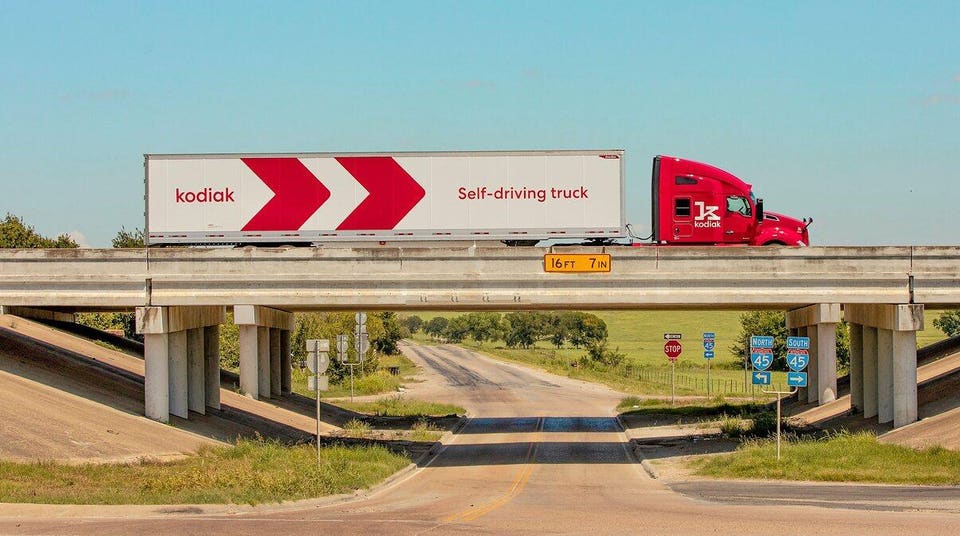
The California Assembly passed AB 316 by a vote of 54-3. Included in the bill is a provision requiring a human driver be present in autonomous trucks while testing, which was lobbied for by the Teamsters’ union. This is only an Assembly Bill: In order to become law it would need a Senate equivalent and the signature of the governor.
Update: The city has also filed new complaints (such as these against Waymo and Cruise) opposing the expansion of the service of the robotaxi companies with the California Public Utilities Commission.
Previously, the San Francisco supervisors, also under lobbying from the Teamsters, refused a petition from Waymo to convert warehouse space to parking spaces for employees at a new facility in an industrial section of SW San Francisco. The parking had already been overwhelming approved by lower committees, but descriptions of the meeting suggest that the conflict between the robotaxi companies and the city has escalated, and the rejection of this parking application gives the appearance of being about that, and not whether these parking spaces are appropriate.
Robocar developers have always anticipated that there would be backlash as the technology became more real. Some of the backlash will be emotional, or from those who feel commercially threatened by the technology. Some will be legitimate, regarding the public safety and road disruption issues which are expected with the piloting of emerging technology like this. The issue of job preservation — many Teamsters drive for a living — has people on both sides, with sympathy for those who feel a threat to their career, but concerns of efforts to protect a dangerous and unpleasant job simply so jobs can be maintained. Such efforts have not usually withstood the path of history, nor has it been viewed as good in hindsight when they did.
For the trucking, it’s obviously ridiculous, long-term, to have drivers in trucks driven by computers. All teams currently do this in order to maintain safety. Their systems are not mature and they know it. But all the plans depend on removing that driver at some point, as has already been done for robotaxis in the city. The law, if passed, requires that driver be there until at least 2029, when the DMV can submit a report with recommendations about removing the driver recommendation.
Outside the state, several trucking companies are already doing tests with no driver, and one company, Gatik, does regular deliveries every day with no safety driver in the vehicle. Waiting until 2029 in California essentially pushes the technology out of the state, even though many of the companies have substantial presence there. Once something is banned, it becomes very difficult to “un-ban” because the officials who remove the ban effectively take responsibility if something goes wrong. As such, they are afraid to do it. They don’t want to take risks, even justified risks, and pay the consequences. (It should be noted that the ban on trucks was already enacted in the original law enabling passenger cars, but this bill extends and reinforces it.)
Indeed, the companies developing trucks have all protested this proposed law, and hope the governor declines to sign the bill. California is the world leader in self-driving technology, and has to think seriously about deliberately discarding that lead because of a union seeking to preserve jobs for its members. They should investigate other ways to ease the burden on those union members. The harsh truth is that 2,000 people die every year in truck crashes in the USA — many of them truck drivers. Preserving jobs is one thing, but preserving a job that kills so many is harder to justify. It’s different from preserving jobs which cause no deaths.
SF vs. Robotaxi
It is likely that the battle in San Francisco will continue to escalate. The state has the right to regulate the roads, not the city. This has frustrated the city which wants more say in how the robotaxis operate there. The city has been frustrated by its powerlessness, and it seems they feel that the robotaxi companies have exploited it and not paid enough respect to the city. Whether that’s true or not, feelings and perceptions matter more in this sort of fight, and the city is not at all without tools to get its way with companies operating there.
The jurisdictional line between the state and city is there for a reason. If each city had too much power for different rules of the road, it could create chaos for drivers and companies with a difficult patchwork of regulators to deal with. Waymo and Cruise are based in the SF Bay Area and that city is by far the best testing ground for both of them, but they may be starting to regret the issues that come with it. San Francisco, in spite of being the big city in the high-tech capital of the world, has a surprisingly luddite history with being the testing ground for the new technologies made there. That is its choice, but it makes it harder for companies to work there.
In the past, that’s been no problem for SF. It had more than enough cachet to scare away a few firms. Today, the move to work-from-home has emptied the SF downtown more than any city in the USA, and it needs to be wary about making companies more afraid to work there. SF has shown that even if it can’t regulate your technology, it will use its more mundane powers, like zoning approval, to get what it wants. And they should win this fight if they want to, and push out the companies — the real question is why they should want to. Yes, being the beta tester of technology like this comes with issues. But a study by SF’s transit agency where they asked their drivers to log all issues with the robotaxis found surprisingly few events. The companies are goofing up, and having many teething problems, but it seems to be anecdotes, not a pattern, but it’s being confused for a pattern.
The city needs to decide just how many teething problems it can tolerate, and then grit their teeth and tolerate them. As long as people are not getting hurt, the technology holds the promise of reducing road risk greatly in the future, and a few snafus are arguably well worth it, for society, and even for the city.
A passive-aggressive battle where cities are eager to find any other method to get rid of these companies isn’t good for either party. The sides should reconcile, or split, costly as that might be. Waymo may already be hoping for a better time in Los Angeles — that remains to be seen. Arizona and Texas have already shown that they are ready to move forward. The problem is that San Francisco didn’t ask for the tech to come to the city — it was born there so it was never a welcome immigrant. A background battle won’t hurt anybody.
Waymo will resolve its parking problem. Indeed, one obvious solution is to use a staging lot and have Waymo vehicles shuttle employees from it. It’s a bit inconvenient, but a good test of a mode that will be necessary when robotaxis get ready to handle things like stadiums and large buildings with high peak traffic flows. Doing it at small scale is more expensive — you don’t want employees to have to wait more than a few minutes for a shuttle, but this is the time when these costs can be handled. But finding a way to get SF on board is important in the long run.
Originally published at Forbes.com in California Bill Bans Self-Driving Trucks. San Francisco Supervisors Block Waymo. Does Luddism Reign?. Copyright © 2023 by Brad Templeton.


Comments
Ross
Fri, 2023-06-02 19:06
Permalink
Uber echoes
How much of this SF resistance could be a hangover from when Uber ran roughshod over all the rules? And AirBnB to some extent. Seems SF officials had their toes stepped on and are trying to keep that from happening again. So less about Luddism and more about power, authority, and control.
Dennis Phillips
Mon, 2023-06-12 22:07
Permalink
More Efficient use of beta stage FSD
I’m currently trying to get State of Oregon legislature to utilize ‘existing’ FSD technology in specific areas. I was almost killed when a car hit me and injured my optic nerve resulting in right side loss of peripheral vision. But I’ve drove 2500 miles last year by changing the direction of my head and eyes often. But Tesla’s should excel at peripheral related skills. Just look at the Tesla crash data where for example they were caused by lane changes or t-bone accidents or bicycles, pedestrians, etc. I need someone at Tesla to work on data analysis. I think a FSD Tesla is superior to a human”s peripheral vision and should be considered as my prosthetic devise since I am capable of providing good hands-on capability. I need some technical help but I’m a computer engineer and willing to work
Jeff Allen
Thu, 2023-06-22 11:03
Permalink
Not a Luddite
Brad, could you take the opposite side of the argument for a second, just for kicks?
I'm someone who has "decided just how many teething problems I can tolerate" and it's just about zero. So how does a citizen like me lobby my government for this without people like you coming and calling me a Luddite? I'm skeptical of self driving technology, and I'm disgusted by the current inability of the government to hold Cruise responsabile for the messes they are making (https://sfstandard.com/business/san-francisco-wants-robotaxis-to-get-tickets-for-moving-violations/), but I'm not going around smashing looms (or cars). So where's the middle ground between corporations usurping our streets and killing our dogs (https://www.sacbee.com/news/california/article276329166.html) and being a Luddite?
brad
Fri, 2023-06-23 01:27
Permalink
Find the middle
If you want to argue it's "just about zero" you must make a case for why it's so close to zero, and paint a story of how the technology can be developed and tested in this zero tolerance world you describe. If you paint a world where it's not possible to deploy innovation, particularly innovation with the promise of saving lives and improving things, that's the luddism.
Offer an option that works. If you don't like the path being taken, describe a better one. But one where innovation and life saving are still readily doable.
Jeff Allen
Fri, 2023-06-23 03:11
Permalink
Public testing
Ok, got it. Fair enough.
So my problem with this is the public testing. Both Cruise and Waymo are regularly inconveniencing other road users, and putting some of them in danger. That's what I have zero tolerance for. I'm especially irritated that Cruise seems to suffer no consequences for blocking the public spaces, and SF says they can't even ticket them. Autonomous vehicles should be towed and impounded every single time they block traffic, and the fines to Cruise to recover their abandoned property should be raised to the point where it is financially unviable to test in public. Then I'll be satisfied, because the autonomous vehicles will be behind fences.
I know from reading your writing for a while that you may now tell me, "there is no alternative, this technology has to be tested in public in order to save lives". Then I think we then need to go look at the risk mitigation used in other life-saving technologies that can only be tested in public. I tried to come up with a list, but all I've got is vaccines, and though I'm a big believer in and consumer of vaccines, I wouldn't use their development history as a good model for how to get acceptance from society!
I wrote a term paper in high school, more than 30 years ago, about how cool self driving would be. And now finally when I see it, and I see the poor interactions between capitalism and democracy that we live under, I am now skeptical... Not of the technology so much, but of the companies who monopolize every other aspect of my life and now have the audacity to come abuse public spaces for their own profit.
Thanks for getting me to clarify my thoughts. I'm still anti-robot, but I know better why!
brad
Sat, 2023-06-24 02:07
Permalink
Public testing
Indeed, what alternative is there to public testing? Just to deploy with never having tested fully? Or to demand perfection or near perfection before public testing?
My standard is, "are they putting the public at significant risk?" Is the risk worse than the risk of other driving? How much worse? Traffic disruptions are a different thing than safety risk, there is a good argument for being much more tolerant of those --- they are done in the name of reducing safety risk, and you don't want to discourage that.
Yes, it's messier than you expected 30 years ago, but it doesn't seem that messy. You must not forget you hear about every little mistake they make, where you don't hear about all the other cars that had crashes or blocked traffic every day. This biases your opinion. We want objective statistics, not anecdotal stories.
Jeff Allen
Sat, 2023-06-24 06:32
Permalink
Accountability
> We want objective statistics, not anecdotal stories.
Nah, I figured out what I want and it's accountability for corporations. Every damn time they get away with an anecdote of stealing from the public commons, I want to hear about it and get angry. Sorry that puts us in opposition on autonomous vehicles testing. But that's ok, it takes lots of different opinions to make a society.
Ps: Speaking of accountability, it would be really interesting to hear the inside story of how Uber's project got the death penalty as a result of committing murder in Arizona. We need more of that and less of Cruise's messes.
brad
Sun, 2023-06-25 03:03
Permalink
Accountability
I have proposed that and I think the vendors would love it. A defined, and high, liability for crashes or other problems. Perhaps double or triple the typical liabilty when a human driver causes a problem. With a sunset though, so the liability comes to match that for human drivers after a few years when things are more mature. i bet the companies would sign up for this in a heartbeat -- the uncertain liability is worse than a high liability.
Add new comment