Full Form

The full length articles from Forbes.com, a few days later after their exclusive ends. This is the source for all my articles on transportation from mid 1999 to the present.

A guide to camping road trips with a Tesla or other EV

With few other travel options available, everybody's taking road trips, and trying to avoid Covid in hotels, camping where they can. Here's a new article from the Forbes site on charging your car while staying at RV parks and other locations so you can tent it and get off the main roads on your trip.

Read [Your guide to a camping road trip in a Tesla or other EV](https://www.forbes.com/sites/bradtempleton/2020/08/25/your-guide-to-a-camping-road-trip-in-a-tesla-or-other-ev/)

Tags: 

Virtual meeting tools need to interoperate

There are many tools now being used to replace physical conferences and meetings -- not just Zoom. And no one system is complete, or even best-of-breed in all the various functions it provides. It's time for these tools to develop a way to interoperate, so people can build an event mixing and matching tools, but allowing attendees to flow smoothly between the tools without needing to create different accounts, re-authenticate or have a large learning curve.

In [Virtual meeting tools need to interoperate](https://www.forbes.com/sites/bradtempleton/2020/08/20/time-for-all-our-virtual-meeting-tools-to-interoperate/) I outline what the tools are and what they need to do.

Tags: 

The subway of the future puts stations at or near the surface

The design of subways goes back to the late 19th century. Tunnels have virtues, but instead of sending a giant train through them every 5 minutes, in the future we could fill the tunnel with smaller electric vans which go nonstop from station to station (changing lines) and even put their stations at or near the surface for quick access and energy efficiency. Imagine a subway like a modern elevator, where you indicate your destination station and it tells you which van to enter to get there in zero to 2 stops. And let the vans go past the end of the line on surface streets to serve more areas. You can actually have more capacity, comfort, speed and convenience, plus much lower cost.

Read how this can happen in a new Forbes article at [The subway of the future puts stations at or near the surface](https://www.forbes.com/sites/bradtempleton/2020/08/17/the-subway-of-the-future-has-stations-on-the-surface/)

Tags: 

How can a city plan for the future when we don't know when Robocars will come

I've written a lot about the big effects robocars and other tech will have on cities, when they get here. But since you can't be sure of the date they will arrive, how does a city planner deal with making plans they know will be wrong? Here is some advice from the computer industry on how to do that.

Read [Memo to city planners contemplating robocars](https://www.forbes.com/sites/bradtempleton/2020/08/12/memo-to-city-planners-contemplating-robocars-keep-it-stupid/)

Tags: 

Self driving cars a boon for those with disabilities

People are studying what Robocars will mean for the disabled. I think they will be a tremendous boon, with more and easier access, much better service, and lower prices. I outline how in my new article on the Forbes site:

[Self driving cars a boon for those with disabilities](https://www.forbes.com/sites/bradtempleton/2020/08/05/self-driving-cars-can-be-a-boon-for-those-with-disabilities/)

Tags: 

Teslas probably aren't safer when on Autopilot, so do they need driver monitoring?

For some time, Tesla has published numbers to suggest that driving is safer with autopilot than it is without it, in that cars have fewer accidents per mile with autopilot on than with it off. The problem is autopilot is mostly on when on the highway, when driving is safer, so this would naturally be the case.

Some new data suggests that it's actually modestly less safe or at best a wash.

Driver monitoring would probably change that, but Tesla resists that. I discuss the issues in a new Forbes.com article at [Teslas probably aren't safer when on Autopilot, so do they need driver monitoring?](https://www.forbes.com/sites/bradtempleton/2020/07/28/teslas-arent-safer-on-autopilot-so-researchers-calling-for-driver-monitoring-may-be-right/)

Tags: 

Waymo to Automated Chrysler Delivery Vans -- More work and less riding?

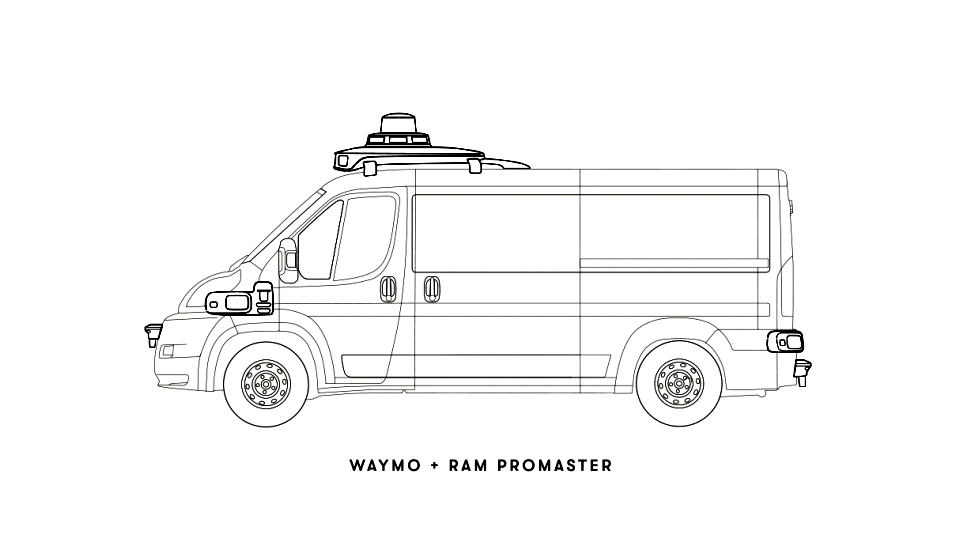
Diagram of RAM Promaster van from FCA with Waymo sensors on boardWaymo

So Waymo is going to now work exclusively with Chrysler to automate light commercial vehicles such as the large Promaster van.

I examine the debate between moving people and moving cargo with self-driving tech, and also the nature of what a "partnership" is in the space.

Read the story on Forbes.com [Waymo to Automated Chrysler Delivery Vans -- More work and less riding?](https://www.forbes.com/sites/bradtempleton/2020/07/22/waymo-to-automate-chrysler-delivery-van--more-work-less-riding/)

Tags: 

Waymo To Automate Chrysler Delivery Van. More Work, Less Riding?

Diagram of RAM Promaster van from FCA with Waymo sensors on boardWaymo

Waymo will automate FCA commercial vans. What does a move by Waymo into light commercial vehicles mean, and what are the reasons to do or not do it? Plus, what is a "partnership" in this space?

Topic: 

The NYT’s Seen A “Future Without Cars” But What About 21st Century Cars?

Last week the NYT ran an piece on imagining Manhattan as a "city without cars." Definitely it would be more pleasant, but people also very much want personal transportation, and so closing or narrowing all the streets may not present a great solution and not beyond New York in any event. The problem is that planners still think about 20th century cars, with all their problems and downsides and without the new abilities the 21st century offers for traffic management using smartphones, self-driving and more.

I explore where we can really go in a city with the 21st century car in [The future without cars changes with 21st century cars](https://www.forbes.com/sites/bradtempleton/2020/07/13/the-nyts-seen-a-future-without-cars-but-what-about-21st-century-cars/)

Tags: 

Slower chargers (2KW and 50KW) might be better for EVs than 7KW and 250KW

In EV charging, there's a big contest to see who can be the fastest, with 250KW and 350KW chargers competing with Tesla's superchargers. But charge-really-fast is "gasoline" thinking and it's much more expensive. For the same money, for example, a corporate parking lot would be better served with 40 Level 1 (2KW) chargers and 4 Level 2 (7KW) than 15 Level 2. And a new generation of cheaper 50KW chargers in places we stop for an hour could make more sense than 250kw ones.

Read the analysis in my article on Forbes.com at [The future of EV charging may be at 50kw](https://www.forbes.com/sites/bradtempleton/2020/07/09/the-future-of-ev-charging-may-be-at-50kw-not-the-gasoline-thinking-of-250kw/)

Tags: 

Pages